
Solutions for Blending Retaining Walls with Existing Gainesville Gardens
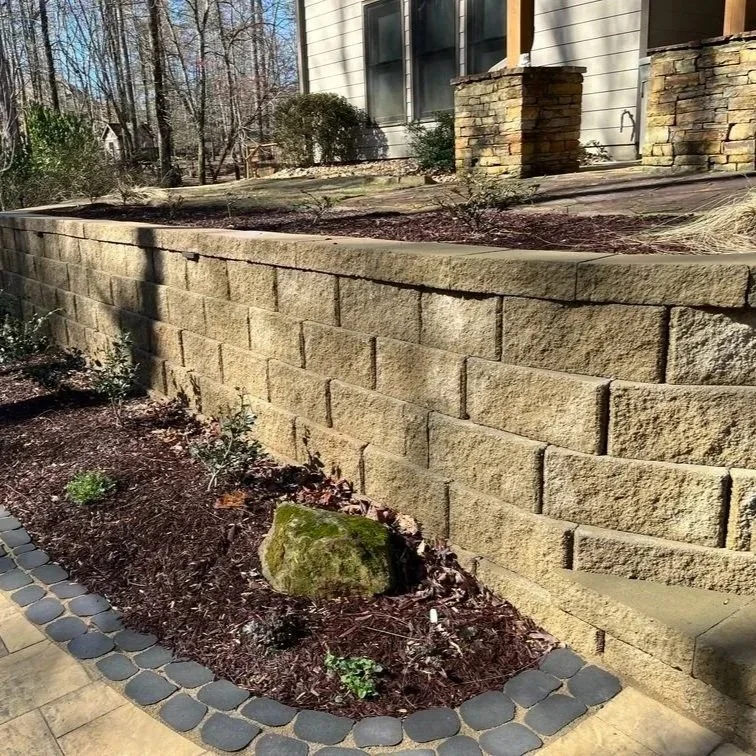
A classic Gainesville landscape where soft, layered greenery and native perennials elegantly blur the lines of a natural stone retaining wall.
Gainesville gardens have a very recognizable character. Many are lush, layered, and slightly informal, shaped by a humid subtropical climate that encourages generous growth. Mature live oaks draped in Spanish moss, azaleas and camellias tucked into partial shade, native grasses, and pollinator-friendly perennials are common features. Rather than rigid geometry, these landscapes usually favor flowing bed lines, mixed textures, and a balance between cultivated areas and a more natural, woodland feel.
Blending Structure with Garden Character
When a retaining wall is added to this kind of setting, the challenge is not just structural. It is
visual and emotional. A wall that looks too stark, overly engineered, or disconnected from the surrounding plants can feel like an intrusion. The goal is to make the wall feel as though it belongs in the garden, supporting it quietly instead of competing with it.
Gainesville’s climate plays a major role in how well this blending works. Hot, wet summers and frequent heavy rain events mean walls must be designed with excellent drainage, while plants near the wall need to tolerate both saturated soil and occasional dry spells. Soils are often sandy near the surface with pockets of clay underneath, which affects both wall stability and plant root performance. These conditions favor designs that allow water to move freely, avoid trapping moisture against structures, and rely on plants that can handle variability.
Planning Before You Build
Before adding a retaining wall, it is worth taking time to assess the existing garden. Walk the yard at different times of day to note sun and shade patterns, especially under mature trees. Observe how water moves during or after heavy rain and where erosion or muddy areas appear. Take note of healthy, well-established plants that define the garden’s character, along with patios, paths, or seating areas that already work well. At the same time, identify problem spots the wall should address, such as collapsing bed edges, unusable slopes, or exposed roots. Views from inside the house and from favorite outdoor seating areas are critical, as these will influence how visible the wall is and how carefully it needs to be softened.
Clarifying goals early helps guide every design decision. Some homeowners prioritize erosion control and stability above all else. Others want more planting space, easier maintenance, or a more inviting outdoor living area. In many cases, function and aesthetics are equally important. When appearance matters most, natural stone or abundant planting may justify higher upfront costs. When budget or structural need dominates, simpler materials can still blend well with thoughtful color choices and layered plantings. Knowing what matters most prevents costly redesigns later.
Introducing a retaining wall into an established Gainesville yard often comes with practical challenges. Access may be limited, mature tree roots must be protected, and existing beds need to survive construction. Visually, there is also the risk of harsh transitions between old and new elements. These issues are typically resolved through careful grading, walls that follow natural contours, and planting strategies that soften edges and hide abrupt changes.
Good planning starts with mapping the yard. A simple sketch showing the house, existing beds, trees, paths, and focal points helps reveal natural lines the wall can follow. Retaining walls blend best when they echo existing curves rather than cutting straight across an organic landscape. Sightlines from windows, patios, and main garden paths should guide placement so the wall frames views rather than blocks them.
Working with Natural Grades
Working with the land’s natural grades is usually more successful than forcing straight lines. Gently curving walls or stepped segments often feel at home in Gainesville gardens with meandering beds and mixed plantings. Straight walls can still work near modern homes or rectangular patios, but transitions should be softened with compatible plant material. Keeping walls lower where possible or breaking taller grade changes into terraces reduces visual dominance and creates opportunities for layered planting, seating, or small paths.
Budgeting in an existing garden requires flexibility. Costs can rise due to hand excavation near roots, plant protection, or limited equipment access. Phasing the project is often effective. Homeowners might address the most urgent erosion issue first, then add decorative finishes, lighting, or additional planting later. Planning for future enhancements ensures the initial wall structure can support those upgrades without rework.
Choosing Materials that Belong
Material choice has a major impact on how well a wall blends. Natural stone is often a favorite in Gainesville gardens because of its varied textures and earth tones that echo bark, soil, and mulch. It pairs well with woodland and native plantings and ages gracefully in humid conditions. Segmental concrete block systems can also work beautifully when chosen in muted, natural colors and paired with stone caps and dense planting. Timber walls fit rustic or wooded gardens but have shorter lifespans in humid climates, making them better for smaller applications. Gabion walls, with their rock-filled baskets, offer a rough, ecological look that works well in informal or native-focused landscapes, especially where drainage is critical.
Regardless of the material, color, and texture, they are key. Earth tones that reflect local soils and tree bark help walls recede visually. Rough or split-face textures break up light and shadow, making walls feel less monolithic. Smooth finishes read as more formal and should be used deliberately. Coordinating wall colors with existing mulch, pavers, and edging creates continuity, while plant color can further tie everything together. Repeating foliage or flower colors near the wall that appear elsewhere in the garden helps the new element feel familiar.
Planting as the Primary Blending Tool
Planting is the most powerful tool for blending retaining walls into existing gardens. At the base of the wall, groundcovers stabilize soil and soften hard edges. In Gainesville, options like sunshine mimosa, asiatic jasmine, and native sedges work well when matched to sun and moisture conditions. Shrubs and perennials layered in front of the wall can partially screen it while still allowing some material to show as a design feature. Using plants already present elsewhere in the yard strengthens the sense of continuity.
Light conditions around walls vary widely. South-facing walls may be hot and dry, while shaded areas under trees stay cooler and moist. Choosing plants suited to these microclimates ensures healthy growth and a lush appearance. Native plants are especially valuable here, as they are adapted to local conditions and support pollinators and birds. Mixing natives with existing ornamentals can be done seamlessly when color, texture, and scale are considered.
Above and between walls, planting opportunities multiply. Terraced walls can include planting pockets or ledges that host trailing or compact plants, breaking up the wall face. Top-of-wall plantings soften the transition between levels, using grasses, perennials, or low informal hedges that gently arch over the edge without blocking views. Trailing plants used selectively can connect upper and lower areas visually, provided they are managed so they do not overwhelm drainage or structure.
Protecting Trees and Managing Water
Trees deserve special care. Mature oaks and other canopy trees often define Gainesville gardens, and their root systems must be protected during construction. Designing walls to curve around root zones or using segmented walls instead of continuous runs preserves these features. Walls can also help stabilize soil under tree canopies, reducing erosion and root exposure when paired with appropriate woodland plantings.
Drainage is essential, but does not have to be visually disruptive. French drains, gravel backfill, and weep holes can be hidden behind planting or integrated into rock mulch areas. Surface water can be guided away using dry creek beds, rock swales, or rain gardens that enhance the garden’s natural look. Dense plantings on slopes above and below walls further control erosion while blending structure into the landscape.
Lighting adds another layer of integration. Subtle, warm lighting improves safety and extends garden use without drawing attention to the wall itself. Often, the best approach is to light plants near the wall rather than the wall face, allowing foliage and movement to take center stage. When walls include steps, seating, or terraces, integrated lighting can unify structure and function.
Retaining walls can also enhance usability. Low walls can double as seating, terraces can host herb or vegetable gardens, and well-placed walls can frame views or create intimate garden rooms. When balanced with open lawn areas and planting beds, walls become organizing elements rather than barriers.
Professional help is often worthwhile for taller walls, complex drainage, or sites with sensitive trees. Local designers, contractors, and engineers understand Gainesville’s soils, climate, and regulations, and can help protect existing gardens during construction. Long-term maintenance should always be considered, favoring durable materials and resilient plants that age well with minimal intervention.
When thoughtfully designed, a retaining wall does not interrupt a Gainesville garden. It supports it. By respecting existing plants, following natural contours, choosing compatible materials, and using planting as a primary blending tool, homeowners can transform problem slopes into stable, beautiful spaces that feel as though they have always been part of the landscape.
FAQs
Start by looking at your home’s architecture, existing hardscape, and garden style. Choose materials with colors and textures that complement these elements and hold up well in Gainesville’s humid climate. Balance durability, maintenance needs, and your budget to find the right solution.
Groundcovers, shrubs, perennials, and native heat-tolerant plants thrive near retaining walls. Match plants to available sun or shade and incorporate species already present in your landscape to keep a unified look.
Permit and engineering requirements depend on wall height, location, and complexity. Taller walls or walls near structures, driveways, or property lines often require professional engineering and city approval. Always verify the latest Gainesville codes before starting construction.
You can soften the look by terracing instead of building one tall wall, adding layered plantings at the base and top, using selective trailing plants, incorporating curves, or adding features like seating or focal points to break up long stretches.
Avoid ignoring drainage needs, choosing materials that clash with your existing landscape, damaging tree roots, underestimating maintenance, and failing to blend the design with your current garden. Good planning prevents these issues.
