How to Integrate a Retaining Wall into Your Gainesville Landscape Design
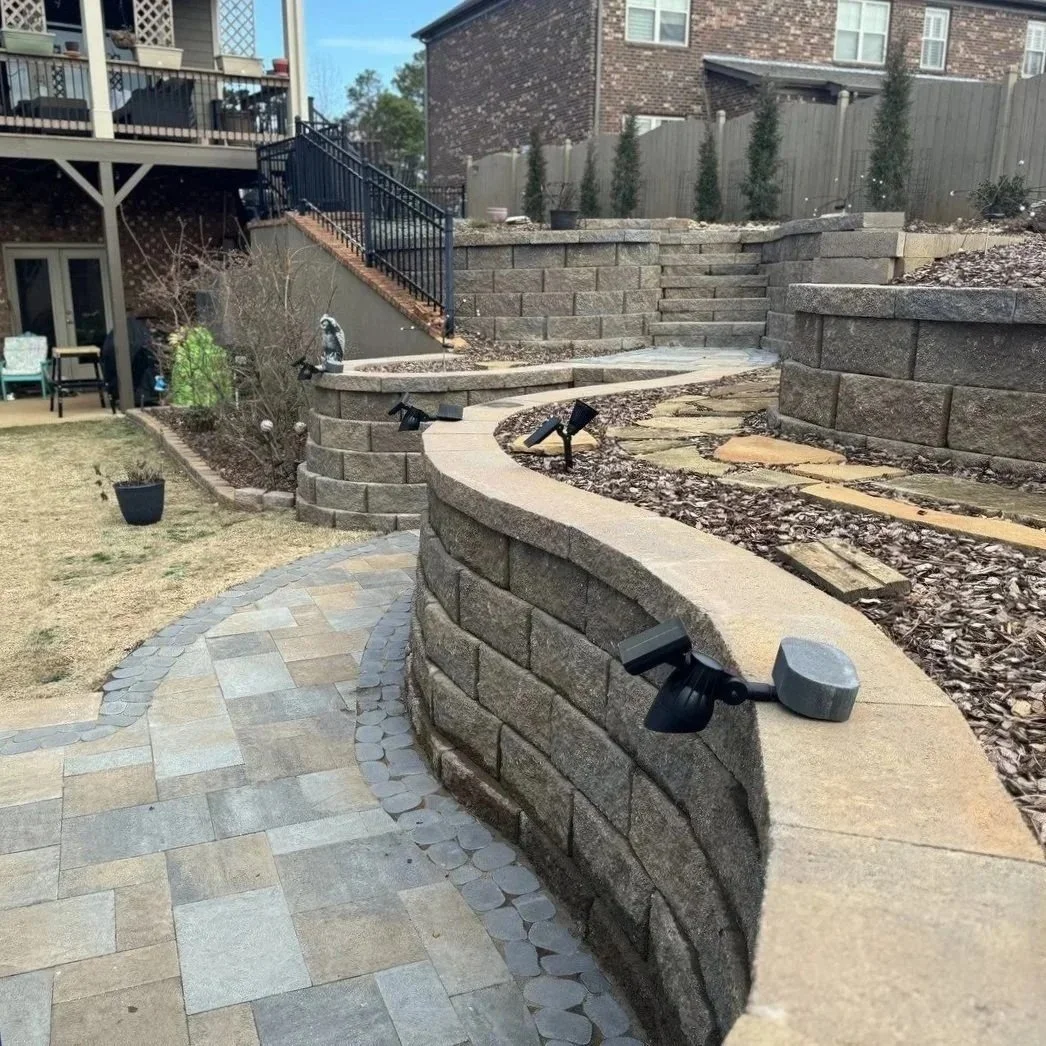
A beautifully designed tiered stone retaining wall transforms a sloped Gainesville yard into a functional, multi-level garden with professional drainage.
Understanding Retaining Walls in Gainesville’s Landscape
A retaining wall does far more than hold dirt in place. Its primary function is to stabilize changes in elevation by resisting soil movement, managing runoff, and preventing erosion. In Gainesville, where rolling terrain, mixed sandy and clay soils, and heavy seasonal rains are common, these functions become especially important. A properly designed retaining wall helps protect foundations, driveways, and walkways from washouts while creating safer, more usable outdoor spaces.
Beyond structural performance, retaining walls play a major role in how a yard looks and feels. They can turn steep or awkward slopes into terraces for gardens, lawns, seating areas, or patios. When thoughtfully integrated, a wall becomes part of the overall landscape experience rather than a hard barrier. This guide walks Gainesville homeowners through planning, designing, and integrating retaining walls that serve both functional and aesthetic goals.
Many properties around Gainesville face recurring challenges, such as sloped yards that won’t hold grass, exposed roots after storms, muddy low spots, and erosion on inclines. Lakefront or pond-adjacent properties often deal with shoreline instability and fluctuating water levels.
Retaining walls address these issues by stabilizing soil, directing water flow, and creating defined edges that are easier to maintain. With Gainesville’s variable soils, especially clay-heavy sublayers, walls must be designed to handle moisture and pressure effectively, or they risk premature failure.
Planning for Function and Visual Impact
Before selecting materials or sketching layouts, it’s important to clarify what the wall needs to accomplish. Some homeowners want erosion control, others want to carve out a flat space for a patio or play area, and many want both function and curb appeal. Clear priorities help determine wall height, length, placement, and whether terracing would be better than a single tall structure. Multiple lower walls often look softer, manage runoff more effectively, and place lower structural demands than a single tall wall.
Placement matters as much as purpose. A retaining wall should respect the home’s foundation, utilities, fences, and property lines. It should not block access paths or interfere with natural drainage routes. Checking surveys and understanding boundaries early avoids costly mistakes. On steeper slopes, stepping the wall back into the hillside or staggering multiple walls can improve stability and visual balance.
Wall height and layout should be based on the amount of grade change you’re addressing. Cutting soil from the higher side and using it to build up the lower side can reduce the height needed. Straight walls are easier to build and maintain, while gentle curves tend to blend more naturally into the landscape. Long walls benefit from visual breaks, such as steps, planters, or elevation changes. Marking the proposed wall location on the ground with paint or flags helps visualize the final result before construction begins.
A retaining wall works best when it’s part of a cohesive landscape plan. It should connect logically to patios, decks, lawns, and planting beds, helping define outdoor rooms and circulation paths. Thinking ahead about steps, lighting, and planting zones prevents awkward additions later and results in a more polished, usable space.
Choosing Materials That Suit Gainesville Conditions
Segmental retaining wall (SRW) blocks are among the most popular choices in Gainesville. These interlocking concrete units are designed specifically for retaining applications and come in a wide range of colors and textures. They handle moisture well when properly drained and can accommodate curves, terraces, steps, and seating features. For lower walls, many SRW systems are suitable for experienced DIY homeowners who follow manufacturer guidelines closely.
Natural stone offers a more organic, high-end look and blends well with native plantings and wooded settings. Stacked stone or boulder walls create a timeless appearance but require skilled installation to ensure proper batter, stability, and drainage. Stone walls tend to be more labor-intensive and costly, but they provide unique character and long-term durability when done correctly.
Timber retaining walls, often built from pressure-treated lumber or landscape ties, are a budget-friendly option for shorter walls. Their natural look fits informal landscapes well, but they have a shorter lifespan than masonry options, especially in Gainesville’s humid climate. Proper drainage is critical, as moisture accelerates rot and insect damage. Timber is best used where replacement down the line is acceptable.
Poured concrete and concrete masonry unit walls are the most robust options and are typically used for taller or load-bearing applications. They can be finished in stone, brick, or stucco for various aesthetic effects. These systems usually require professional design and construction, especially where they support driveways or structures. In Gainesville’s wet conditions, waterproofing and drainage are essential to prevent cracking and long-term issues.
Evaluating Your Site Before You Build
Understanding your site’s slope and grade is a critical first step. Simple tools like string levels can help estimate rise over run and determine whether terracing is advisable. Walking the site after heavy rain reveals how water flows, where it pools, and which areas are prone to erosion. Signs like soil cracks, leaning fences, or exposed roots indicate instability that needs to be addressed in the design.
Soil type also plays a major role. Sandy soils drain quickly but can erode, while clay soils hold water and increase wall pressure. Many Gainesville properties contain a mix of both, along with compacted fill near homes. Observing puddling, soggy areas, and runoff paths helps determine drainage needs. Complex sites often benefit from professional assessment before finalizing plans.
Before digging, utilities must be located, including irrigation lines and low-voltage lighting. Property lines and easements should be confirmed to avoid legal issues. Steep slopes, tall walls, high water tables, or evidence of past failures are red flags that warrant professional input.
Drainage and Structural Basics That Matter
Drainage is the most important factor in retaining wall longevity. Water trapped behind a wall creates hydrostatic pressure that can cause bulging, cracking, or collapse. In Gainesville’s heavy rains, proper drainage is not optional. Free-draining gravel behind the wall allows water to move downward, while landscape fabric prevents soil from clogging this drainage zone.
Perforated drain pipes placed near the base of the wall collect water and route it to a safe outlet. Solid walls may also use weep holes to allow water to drain from the face. Discharge points must be carefully chosen to avoid erosion or flooding elsewhere. Surface water management above and below the wall is equally important, using grading, swales, and downspouts to keep large volumes of water away from the structure.
A solid base supports everything above it. Excavation, compacted aggregate, and careful leveling prevent settling and movement. Batter, the slight backward lean into the soil, improves stability and is often built into SRW systems. Taller walls or those supporting loads typically require geogrid reinforcement, which ties the wall into the soil mass and distributes pressure more effectively. Walls above code thresholds or in challenging conditions should involve a structural engineer.
Blending Walls with Plants and Outdoor Living
Plants play a key role in softening retaining walls and controlling erosion. Gainesville’s climate supports a wide range of native and adapted plants that can handle heat, humidity, and heavy rain. Groundcovers and grasses help stabilize soil, while shrubs and perennials add color and texture. Plant placement should allow access for inspection and maintenance, avoiding aggressive roots near the wall base.
Cascading plants can spill over wall edges to soften hard lines, while raised beds and terraces create layered visual interest. Mulch and erosion-control plantings protect soil during storms. Thoughtful planting not only improves appearance but also supports long-term performance.
Retaining walls often form the backbone of outdoor living spaces. They can define patios, create seating walls around fire pits, or frame dining areas. Coordinating wall materials with existing hardscape and home architecture creates visual harmony. Integrated steps, railings, and lighting improve safety and usability, especially at night. Low-voltage lighting highlights textures, guides movement, and enhances ambiance without overpowering the space.
Avoiding Common Design and Construction Mistakes
The most frequent failures come from poor drainage, weak base preparation, and building walls too tall without engineering. Ignoring how water flows across the site can create new erosion or flooding problems. Aesthetically, choosing materials that clash with the home or overcomplicating designs without structural planning can detract from both appearance and performance.
Success comes from respecting both engineering principles and design cohesion. Invisible elements like drainage and compaction are just as important as the visible wall face.
Conclusion
Integrating a retaining wall into a Gainesville landscape is about more than solving a slope problem. It’s an opportunity to reshape the yard into functional, attractive outdoor spaces that handle heavy rains and varied terrain gracefully. Understanding site conditions, clarifying goals, choosing appropriate materials, and respecting structural basics all contribute to a wall that performs well and looks intentional.
When combined with thoughtful planting, lighting, and hardscape connections, a retaining wall becomes a defining feature rather than a necessary compromise. By planning holistically and knowing when professional support is needed, Gainesville homeowners can create landscapes that protect their property, enhance daily living, and provide long-term value.
FAQs
Maximum heights vary by local code and must be confirmed with the Gainesville or Alachua County building department. Walls above modest heights, or those supporting driveways or structures, often require permits and engineering.
High-quality segmental concrete block systems and properly built masonry walls generally offer the best durability with minimal upkeep in Gainesville’s climate. Timber walls require more frequent replacement.
Small, low walls can be realistic DIY projects for skilled homeowners. Taller, load-bearing, or complex walls should involve professionals to ensure safety and longevity.
Proper drainage is essential. Use gravel backfill, perforated drainpipes, appropriate outlets, and surface grading that directs water away from the wall, and perform routine inspections after major storms.