
How To Install Pavers for a Patio in Gainesville, GA: A Complete Guide
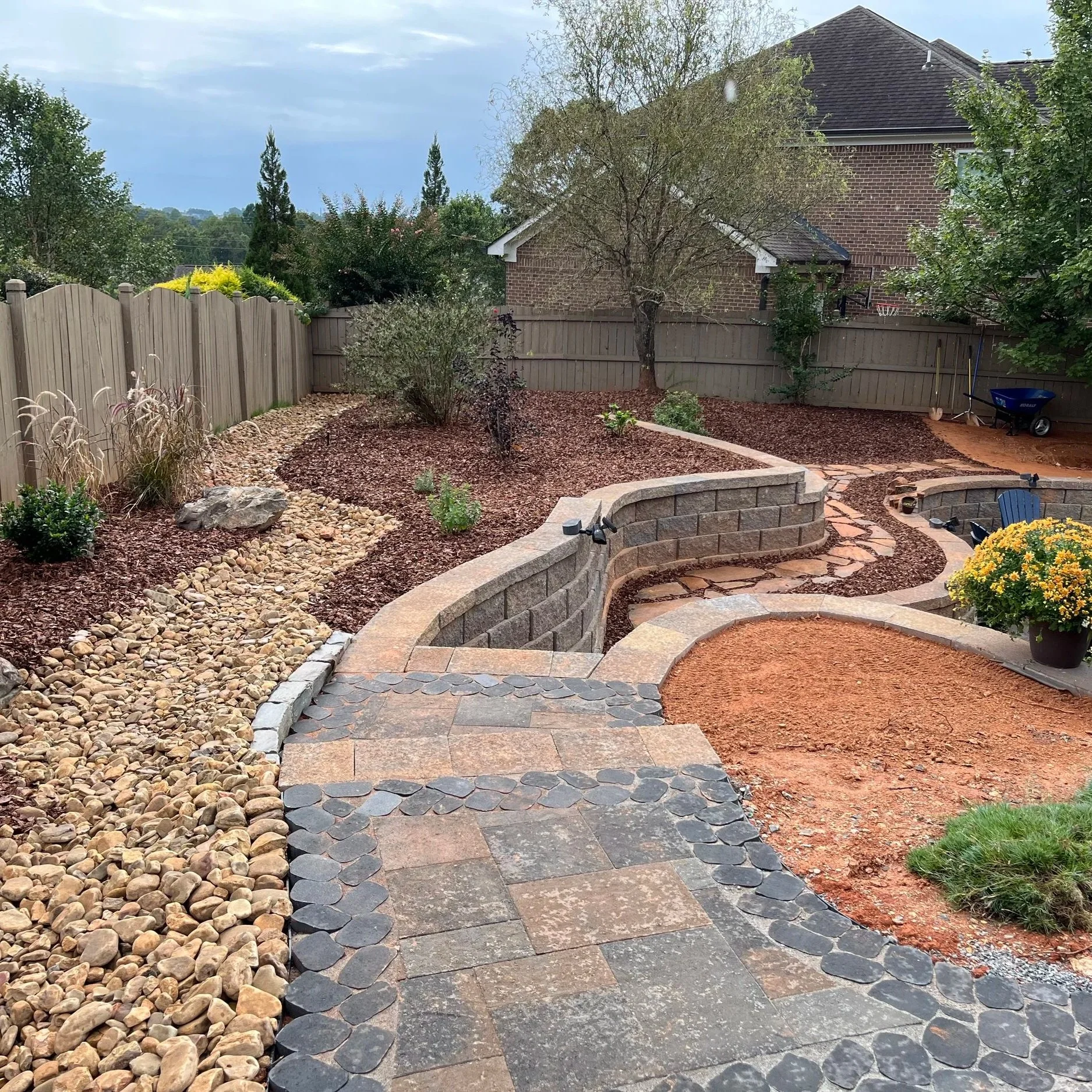
Installing a backyard patio in Gainesville, GA, showing yard evaluation, excavation, and planning for proper drainage and layout.
Evaluating The Yard And Establishing A Realistic Installation Plan
Every successful patio installation in Gainesville begins with a careful evaluation of the yard rather than jumping straight into materials and patterns. Properties across North Georgia often feature uneven grades, clay-heavy soil, and drainage patterns shaped by years of rainfall and landscaping changes. Walking the site helps identify slopes, low spots, and areas where water naturally collects after storms. Those observations influence how deep excavation must go and how the patio should be oriented to manage runoff instead of trapping it.
Existing features also guide planning decisions. Mature trees, nearby foundations, fences, and retaining walls all affect layout and access. Underground utilities, irrigation lines, and lighting cables often cross patio zones without being obvious from the surface. Addressing these factors early prevents redesigns later in the process. Establishing a clear plan grounded in real site conditions allows the installation process to move forward methodically rather than reactively, which supports long-term performance instead of short-term appearance.
Understanding Soil Conditions And Their Impact On Patio Stability
Soil behavior plays a major role in how a paver patio performs over time, particularly in Gainesville, where clay soils dominate many neighborhoods. Clay expands when wet and contracts during dry periods, creating movement beneath hardscape surfaces. Without adequate preparation, that movement transfers upward into the paver system, leading to uneven settling, joint separation, and surface shifting.
Evaluating soil composition allows installers to tailor excavation depth and base design appropriately. Some areas require deeper aggregate bases to distribute loads evenly and buffer soil movement. Moisture content also matters during preparation. Soil that is too wet or too dry will not compact properly, undermining stability from the start. Understanding soil conditions transforms installation from a cosmetic project into a structural one, where each layer contributes to durability rather than relying on surface materials alone.
Marking Layout And Confirming Patio Dimensions Before Digging
Clear layout confirmation prevents costly adjustments once excavation begins. Marking the patio footprint with stakes, string lines, or marking paint provides a visual reference for shape, size, and orientation. In Gainesville yards with irregular boundaries or elevation changes, layout verification helps confirm that the design fits the space comfortably without crowding walkways or restricting access.
Layout confirmation also allows homeowners to visualize furniture placement, traffic flow, and transitions to adjacent areas. Small adjustments made at this stage often improve usability significantly. Confirming elevations relative to doors, steps, and foundations prevents issues with water intrusion or awkward step heights. Taking time to finalize the layout before digging preserves flexibility and reduces the likelihood of mid-project revisions that compromise efficiency.
Excavation Depth And Why It Determines Long-Term Performance
Excavation sets the foundation for every layer that follows. For paver patios in Gainesville, excavation depth must account for base material, bedding layer, and the pavers themselves while accommodating soil conditions. Shallow excavation leads to thin bases that fail under load and shift with soil movement.
Proper excavation removes organic material such as roots and topsoil that break down over time. Exposing a stable subgrade allows compaction to create a reliable platform. Depth varies based on patio size, expected use, and soil behavior, but cutting corners at this stage almost always leads to future repairs. Excavation represents one of the most labor-intensive steps, yet it directly influences how well the patio performs through years of weather cycles.
Establishing Proper Slope For Drainage Control
Drainage planning begins during excavation rather than after pavers are installed. Patios require a subtle slope to guide water away from structures and prevent pooling. In Gainesville’s climate, heavy rain events test drainage designs regularly. Even minor errors in slope lead to standing water that accelerates wear and creates maintenance issues.
Establishing slope involves shaping the subgrade before base materials are placed. Laser levels or string lines help maintain a consistent pitch across the patio surface. Drainage planning also considers where water exits the patio area. Adjacent lawns, planting beds, and drainage paths must accommodate runoff without causing erosion. Thoughtful slope design protects both the patio and the surrounding landscape from moisture-related damage.
Installing And Compacting The Aggregate Base
The aggregate base provides structural support and load distribution for the paver system. In Gainesville patios, the base typically consists of clean, angular stone compacted in lifts to achieve uniform density. Each lift must be compacted thoroughly before adding the next layer to prevent future settling.
Base thickness varies depending on soil conditions and intended use. Patios supporting furniture and foot traffic may require less depth than areas exposed to heavier loads, but base quality remains equally important. Proper compaction minimizes voids and resists movement caused by moisture changes. Skipping or rushing base installation compromises the entire system regardless of paver quality.
Edge Restraint Installation And Containment Planning
Edge restraints keep pavers locked in place and prevent lateral movement over time. Installing restraints during base preparation allows them to anchor into compacted material rather than loose soil. In Gainesville’s expanding clay soils, edge containment experiences ongoing pressure that tests restraint strength.
Restraint options include rigid plastic edging, aluminum systems, or concrete borders, depending on design and location. Planning edge placement before pavers are laid creates clean transitions between the patio and the surrounding landscape. Without proper restraint, pavers gradually migrate outward, leading to uneven joints and maintenance challenges that surface long after installation appears complete.
Preparing The Bedding Layer For Accurate Paver Placement
The bedding layer sits directly beneath the pavers and allows for precise leveling. Typically composed of coarse sand or fine aggregate, this layer should remain loose enough to adjust paver height while maintaining uniform thickness. Screeding the bedding layer creates a flat, even surface that reflects the final patio grade.
Consistency matters more than thickness. Uneven bedding leads to rocking pavers and joint irregularities. In Gainesville installations, moisture control during bedding placement affects performance. Excessively wet material compacts unevenly, while overly dry material shifts during paver placement. Preparing the bedding layer carefully supports accurate alignment and surface stability.
Placing Pavers And Maintaining Pattern Integrity
Paver placement transforms preparation work into a visible surface, but accuracy remains critical. Laying pavers according to the established pattern maintains consistent joint spacing and alignment. Working outward from a straight reference line helps preserve pattern integrity across the patio.
Cutting pavers along edges and transitions requires precision to avoid gaps and irregular shapes. In Gainesville, patios with curves or irregular boundaries, careful cutting enhances appearance and structural fit. Checking alignment regularly during placement prevents cumulative errors that become difficult to correct later. Attention during this phase preserves both visual appeal and long-term performance.
Filling Joints And Locking The Surface Together
Joint filling transforms individual pavers into a unified surface that resists movement and distributes loads evenly. Once all pavers are placed and cuts are completed, joint material is swept across the surface and worked into the gaps between units. In Gainesville patio installations, joint material choice influences both appearance and performance. Traditional joint sand allows slight flexibility, while polymer-modified sands harden when activated with moisture, reducing weed growth and joint erosion.
Proper joint filling requires patience rather than speed. Multiple passes ensure joints fill completely from top to bottom. Skipping this step or rushing through it leaves voids that allow pavers to shift under foot traffic. In North Georgia’s rainfall patterns, incomplete joints wash out quickly, creating uneven surfaces and maintenance issues. Well-filled joints help the patio behave as a single system rather than a collection of individual stones.
Final Compaction And Surface Settling
Compaction does not end with the base layer. After joints are filled, the entire patio surface requires final compaction to seat pavers into the bedding layer and lock joints in place. Using a plate compactor with a protective pad prevents surface damage while applying even pressure. This step settles pavers uniformly and reveals any areas that require adjustment before the patio is considered complete.
In Gainesville installations, final compaction often occurs in multiple passes with additional joint material added between passes. That process fills micro-voids created as pavers settle. Skipping final compaction leads to rocking pavers and premature joint loss. Proper compaction reinforces the structural integrity established during earlier stages and prepares the patio for regular use.
Final Grading And Transition Adjustments
Once compaction is complete, final grading adjustments ensure smooth transitions between the patio and surrounding areas. Edges should meet lawns, walkways, or steps cleanly without abrupt drops or raised lips. In Gainesville yards, subtle grading adjustments improve drainage and reduce erosion around patio borders.
Checking transitions also helps identify drainage concerns before they become problems. Water should move away from structures and flow naturally toward designated exit points. Final grading aligns the patio with the broader landscape rather than leaving it visually or functionally disconnected. Attention at this stage refines both usability and longevity.
Cleaning And Initial Curing Considerations
Cleaning the patio removes excess joint material and construction debris that affect appearance and performance. Gentle sweeping and controlled rinsing prepare the surface for regular use. When polymer-modified joint materials are used, curing conditions matter. Moisture activates binding agents, but excessive water too soon may weaken joints.
In Gainesville’s humid climate, curing timelines may vary depending on weather conditions. Allowing the patio to cure properly before heavy use supports joint stability and surface cohesion. Cleaning also offers a final opportunity to inspect alignment, joints, and edges while adjustments remain manageable.
Understanding Long-Term Performance Expectations
A properly installed paver patio performs as a flexible system rather than a rigid slab. In Gainesville’s clay soils and changing moisture conditions, slight movement over time remains normal. Well-prepared bases, solid edge restraints, and fully filled joints accommodate that movement without compromising usability.
Homeowners benefit from understanding that maintenance supports longevity rather than signaling failure. Occasional joint replenishment, cleaning, and inspection preserve performance through seasonal changes. Viewing the patio as a long-term landscape feature encourages proactive care rather than reactive repairs.
Maintenance Practices That Preserve Patio Integrity
Routine maintenance keeps paver patios performing as intended. Sweeping removes debris that degrades joints. Managing nearby soil, mulch, and vegetation prevents material migration into joints. Addressing small issues early prevents them from becoming larger problems.
In Gainesville, properties with heavy tree cover require more frequent attention to leaf accumulation. Moist organic debris encourages weed growth and joint breakdown if left unchecked. Maintenance routines vary by environment and usage, but consistent care extends the life of the patio significantly.
When Professional Installation Adds Value
While some homeowners attempt paver installation as a do-it-yourself project, professional experience often proves valuable in Gainesville conditions. Soil evaluation, drainage planning, and base preparation demand technical understanding developed through repeated exposure to similar sites. Professionals anticipate challenges that may not be obvious during initial planning.
Professional installation does not remove homeowner involvement but complements it. Collaboration during design and preparation leads to results that reflect both functional requirements and personal preferences. Recognizing when expertise enhances outcomes helps homeowners make informed decisions about their projects.
FAQs
Installation timelines vary based on patio size, site conditions, and weather. Many residential patios take several days from excavation through final compaction.
Some patios require additional drainage depending on soil conditions and slope. Proper grading and base design often manage water effectively without separate drains.
Existing concrete may be used as a base in some situations, but it must be stable and properly prepared. Building over failing concrete often leads to future issues.
Base depth depends on soil conditions and patio use. Gainesville’s clay soils often require deeper bases than homeowners expect for long-term stability.
Maintenance typically includes sweeping, occasional joint material replenishment, and monitoring edges and drainage to preserve performance over time.
