
How To Avoid Common Paver Installation Mistakes in Gainesville, GA
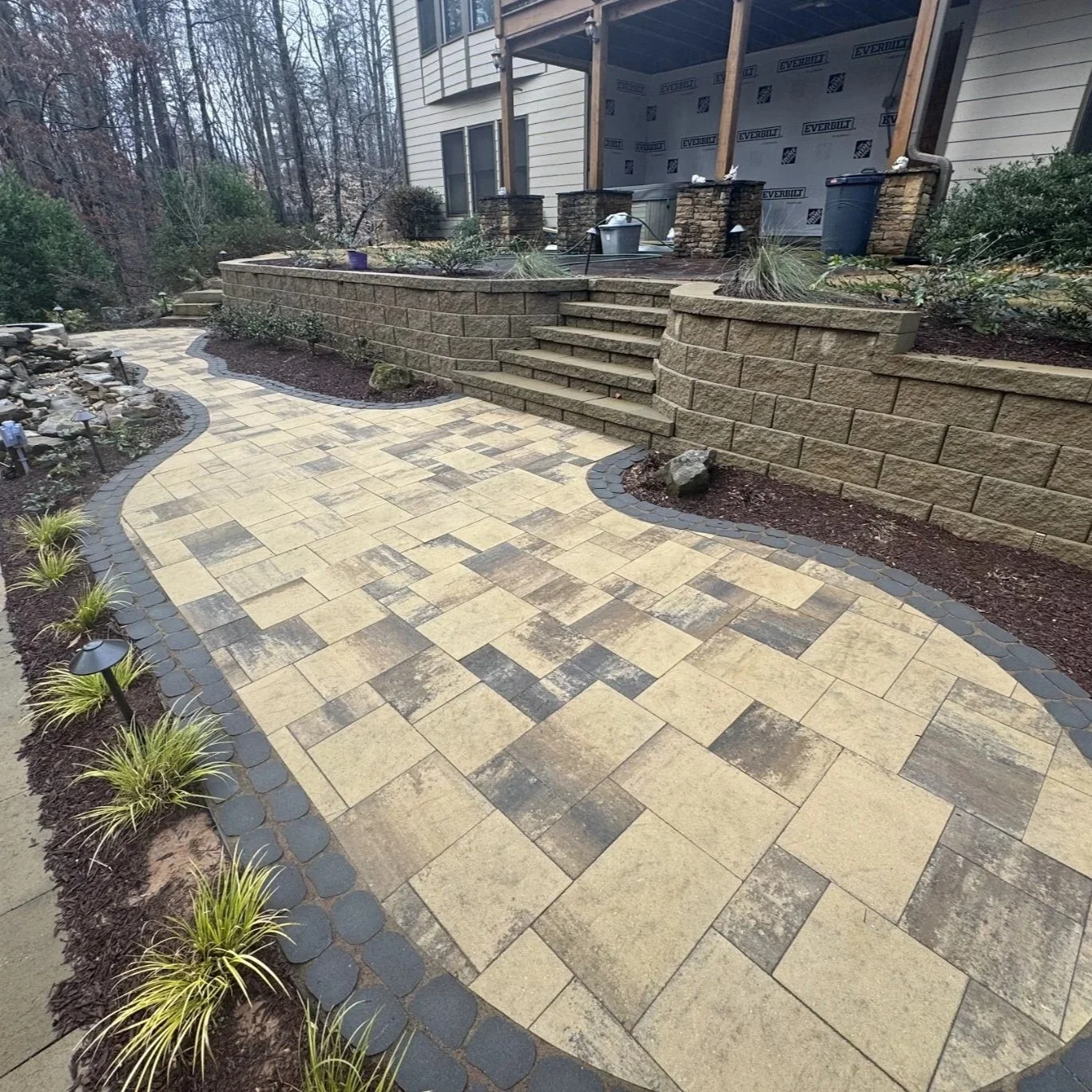
Avoid common paver mistakes in Gainesville by preparing soil and addressing red clay conditions before installation.
Understanding Site Preparation And Soil Conditions In North Georgia
Paver installation problems in Gainesville, Georgia, often start long before the first stone ever touches the ground. The region’s red clay soil behaves very differently from sandy or loamy soils, especially during seasonal rain cycles. Clay holds moisture, expands when wet, and contracts as it dries, which creates movement beneath patios, walkways, and driveways. Homeowners frequently underestimate how much excavation and soil conditioning a project actually needs. Skipping proper site preparation may save time upfront, but it introduces long-term instability that becomes obvious after the first heavy rain or a full year of weather changes. Pavers may appear level during installation, yet subtle soil movement underneath can create uneven surfaces, pooling water, and shifting edges that worsen over time.
Professional installers in Gainesville pay close attention to soil compaction, moisture content, and grade consistency before laying a base. A stable paver system depends on removing organic material, compacting the subgrade in lifts, and adjusting for local drainage patterns. Yards in this area often slope toward foundations or collect runoff from neighboring properties, which adds another layer of complexity. Ignoring these factors may lead to settling that pulls pavers apart or causes low spots where water collects. Over time, those conditions allow weeds to establish, ants to burrow, and surface stones to rock underfoot. Proper site preparation acts as the foundation for every other step, and mistakes at this stage tend to compound rather than remain isolated.
Base Layer Design And Compaction Errors That Lead To Failure
The base layer serves as the structural backbone of any paver installation, yet it remains one of the most misunderstood components among property owners. In Gainesville, Georgia, improper base thickness and poor compaction rank among the most common paver installation mistakes. Many assume that a thin layer of gravel will perform the same as a properly engineered base, but the difference shows up quickly once weight and moisture enter the equation. Driveways, in particular, require deeper bases due to vehicle load, while patios and walkways still demand enough depth to resist soil movement. Using the wrong aggregate size or skipping mechanical compaction introduces weak points that gradually shift under normal use.
Experienced landscapers understand that base material must interlock and compact tightly to distribute weight evenly. Crushed stone with angular edges performs far better than rounded gravel, which tends to roll and separate under pressure. Compaction must occur in stages rather than all at once, allowing each layer to lock into place before adding more material. Rushing this process often results in base layers that appear firm on the surface but compress unevenly later. Over time, these flaws show up as sunken sections, raised edges, or pavers that crack due to uneven stress. A well-designed base resists seasonal soil movement and keeps the finished surface performing as intended year after year.
Drainage Planning Mistakes That Cause Long-Term Damage
Drainage plays a critical role in preventing paver installation problems, especially in an area like Gainesville, Georgia, where heavy rainfall events are common. Water that fails to move away from a paver surface creates pressure beneath the system, softening base materials and accelerating soil movement. Many installations focus solely on surface appearance without addressing how water will travel across and below the pavers. Flat installations or improperly sloped areas allow water to linger, which eventually seeps into joints and base layers. Over time, that moisture weakens structural support and increases the likelihood of shifting or settling.
Proper drainage planning considers both surface runoff and subsurface water movement. Installers adjust the slope to guide water away from structures while maintaining a comfortable walking surface. In some properties, additional drainage solutions such as gravel trenches or subsurface channels help manage runoff from roofs or neighboring yards. Gainesville landscapes often include rolling terrain, which requires careful grading to prevent water from concentrating in low areas. Ignoring drainage may not cause immediate failure, but the damage builds gradually. Pavers loosen, joint sand washes out, and freeze-thaw cycles magnify existing weaknesses. Effective drainage planning protects the entire system and extends the lifespan of the installation without constant repairs.
How To Avoid Common Paver Installation Mistakes in Gainesville, GA
Understanding Site Preparation And Soil Conditions In North Georgia
Paver installation problems in Gainesville, Georgia, often start long before the first stone ever touches the ground. The region’s red clay soil behaves very differently from sandy or loamy soils, especially during seasonal rain cycles. Clay holds moisture, expands when wet, and contracts as it dries, which creates movement beneath patios, walkways, and driveways. Homeowners frequently underestimate how much excavation and soil conditioning a project actually needs. Skipping proper site preparation may save time upfront, but it introduces long-term instability that becomes obvious after the first heavy rain or a full year of weather changes. Pavers may appear level during installation, yet subtle soil movement underneath can create uneven surfaces, pooling water, and shifting edges that worsen over time.
Professional installers in Gainesville pay close attention to soil compaction, moisture content, and grade consistency before laying a base. A stable paver system depends on removing organic material, compacting the subgrade in lifts, and adjusting for local drainage patterns. Yards in this area often slope toward foundations or collect runoff from neighboring properties, which adds another layer of complexity. Ignoring these factors may lead to settling that pulls pavers apart or causes low spots where water collects. Over time, those conditions allow weeds to establish, ants to burrow, and surface stones to rock underfoot. Proper site preparation acts as the foundation for every other step, and mistakes at this stage tend to compound rather than remain isolated.
Base Layer Design And Compaction Errors That Lead To Failure
The base layer serves as the structural backbone of any paver installation, yet it remains one of the most misunderstood components among property owners. In Gainesville, Georgia, improper base thickness and poor compaction rank among the most common paver installation mistakes. Many assume that a thin layer of gravel will perform the same as a properly engineered base, but the difference shows up quickly once weight and moisture enter the equation. Driveways, in particular, require deeper bases due to vehicle load, while patios and walkways still demand enough depth to resist soil movement. Using the wrong aggregate size or skipping mechanical compaction introduces weak points that gradually shift under normal use.
Experienced landscapers understand that base material must interlock and compact tightly to distribute weight evenly. Crushed stone with angular edges performs far better than rounded gravel, which tends to roll and separate under pressure. Compaction must occur in stages rather than all at once, allowing each layer to lock into place before adding more material. Rushing this process often results in base layers that appear firm on the surface but compress unevenly later. Over time, these flaws show up as sunken sections, raised edges, or pavers that crack due to uneven stress. A well-designed base resists seasonal soil movement and keeps the finished surface performing as intended year after year.
Drainage Planning Mistakes That Cause Long-Term Damage
Drainage plays a critical role in preventing paver installation problems, especially in an area like Gainesville, Georgia, where heavy rainfall events are common. Water that fails to move away from a paver surface creates pressure beneath the system, softening base materials and accelerating soil movement. Many installations focus solely on surface appearance without addressing how water will travel across and below the pavers. Flat installations or improperly sloped areas allow water to linger, which eventually seeps into joints and base layers. Over time, that moisture weakens structural support and increases the likelihood of shifting or settling.
Proper drainage planning considers both surface runoff and subsurface water movement. Installers adjust the slope to guide water away from structures while maintaining a comfortable walking surface. In some properties, additional drainage solutions such as gravel trenches or subsurface channels help manage runoff from roofs or neighboring yards. Gainesville landscapes often include rolling terrain, which requires careful grading to prevent water from concentrating in low areas. Ignoring drainage may not cause immediate failure, but the damage builds gradually. Pavers loosen, joint sand washes out, and seasonal temperature swings magnify existing weaknesses. Effective drainage planning protects the entire system and extends the lifespan of the installation without constant repairs.
Overlooking Edge Restraints And Perimeter Support Systems
Edge restraints often receive far less attention than they deserve during paver installation projects, yet they play a decisive role in long-term performance. In Gainesville, Georgia, soil movement and rainfall place constant outward pressure on paver systems, especially along borders where there is less structural resistance. Without proper edge restraints, pavers slowly migrate outward, joints widen, and the surface begins to lose its original shape. Homeowners may first notice small gaps or individual stones that feel loose underfoot, but those early signs usually indicate a broader structural issue developing beneath the surface.
Effective perimeter support requires rigid edge restraints installed at the correct depth and securely anchored into the base material. Plastic, aluminum, or concrete edge systems each serve different purposes depending on the installation area and expected load. Improvised solutions like buried pavers or untreated lumber fail to provide consistent resistance over time. As soil expands and contracts, those makeshift edges shift or degrade, allowing the entire field of pavers to spread. In sloped yards common around Gainesville, gravity further accelerates this movement. Proper edge restraints contain lateral forces, preserve tight joint spacing, and maintain surface integrity long after installation.
Incorrect Bedding Sand Selection And Installation Practices
The bedding layer beneath pavers may appear minor compared to base construction, but errors at this stage frequently undermine otherwise solid installations. In Gainesville, Georgia, installers sometimes use the wrong type of sand or apply it unevenly, creating inconsistencies that show up months later. Bedding sand must provide a smooth, level surface while allowing pavers to seat evenly during compaction. Sands with excessive fines or rounded particles tend to shift under load, creating voids that cause pavers to rock or sink independently.
Correct bedding sand placement involves screeding to a consistent thickness without compacting the layer before paver placement. Compressing bedding sand too early reduces its ability to accommodate minor adjustments when pavers are set. Once pavers are installed, final compaction locks them into the bedding layer while distributing weight across the surface. Skipping steps or rushing this process often leads to uneven heights, tripping hazards, and poor joint alignment. Over time, these flaws worsen as traffic and weather stress the surface. Proper bedding sand selection and technique support uniform load transfer and preserve a smooth, durable finish that holds up under daily use.
Joint Sand Mistakes And Their Impact On Stability
Joint sand serves more than a cosmetic function in paver installations, yet it frequently receives minimal consideration during planning and execution. In Gainesville, Georgia, choosing the wrong joint sand or failing to install it correctly leads to shifting pavers, weed growth, and water intrusion. Traditional sand washes out easily during heavy rain, leaving joints exposed and pavers unsupported along their edges. Polymeric sands offer improved performance, but only when installed under proper conditions and activated correctly.
Effective joint stabilization requires dry conditions, clean paver surfaces, and thorough compaction before sand application. Activating polymeric sand too aggressively or unevenly may cause surface haze or incomplete curing within joints. Inconsistent joint fill allows pavers to move independently, increasing stress on individual stones and the underlying base. Over time, these gaps invite ants, weeds, and erosion, all of which compromise system stability. Well-installed joint sand locks pavers together as a unified surface, distributing loads and resisting movement caused by weather and foot traffic.
FAQs
Improper base preparation, combined with clay soil movement, causes many paver failures in Gainesville. When installers underestimate excavation depth or compaction needs, the surface may look stable initially, but it begins to settle and shift as moisture levels change over time.
Base depth depends on usage, but patios typically require several inches of compacted aggregate, while driveways demand significantly more to handle vehicle loads. Clay soil conditions in North Georgia often justify deeper bases than standard recommendations.
Heavy rain saturates soil and base layers, especially when drainage planning is inadequate. Water softens support materials, allowing pavers to settle unevenly once the weight returns to the surface.
Many paver issues can be corrected by removing affected sections, addressing base or drainage problems, and reinstalling the surface properly. Early intervention prevents widespread failure and limits repair scope.
Pavers work well on slopes when proper grading, edge restraints, and drainage systems are incorporated. Ignoring slope dynamics often leads to shifting and surface instability over time.
