
Common Mistakes Homeowners Make When DIYing Retaining Walls
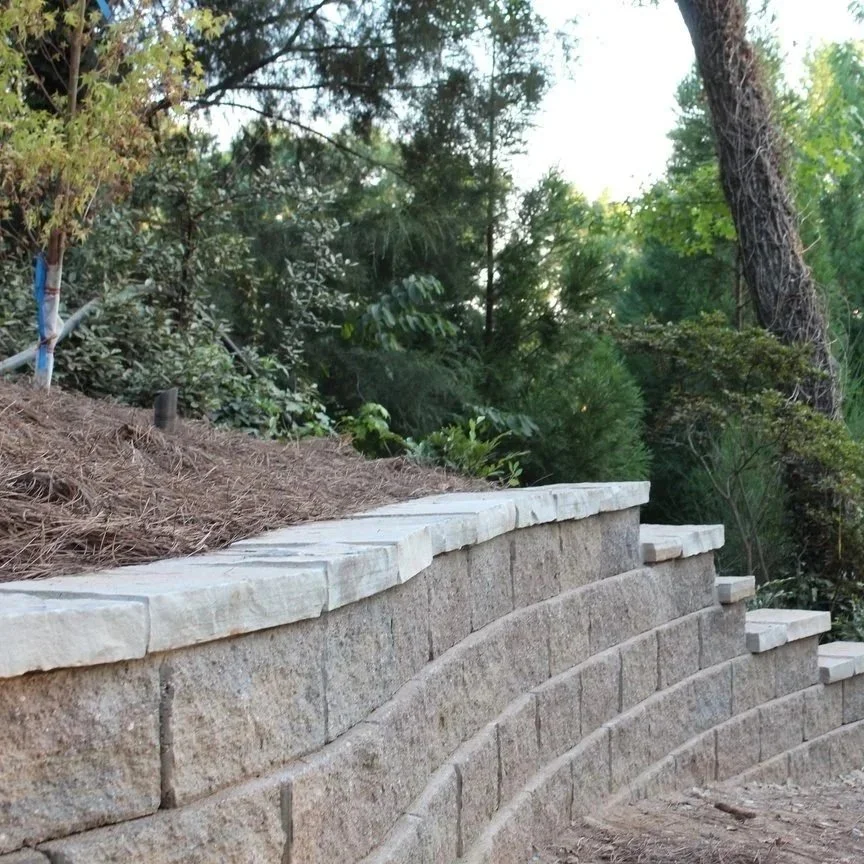
Common DIY retaining wall mistakes like improper drainage and unstable foundations can lead to structural failure, bulging, and costly repairs.
Why DIY Retaining Walls Often Go Wrong
A retaining wall is not just a decorative border that happens to hold soil in place. Its real job is to resist constant pressure from the earth behind it, manage water movement, and stabilize elevation changes. Soil naturally wants to move downhill, and water trapped in that soil adds even more force. Over time, freeze-thaw cycles, heavy rain, and normal ground movement all contribute to the wall's deterioration. This is why there is a big difference between a short garden edging wall and an actual load-bearing retaining wall. One is cosmetic. The other is structural.
Around homes, retaining walls show up in terraced yards, driveway edges, walkout basements, landscaping beds, and erosion-prone slopes. Many of them look simple once finished, which leads homeowners to underestimate what is happening behind the scenes. When a retaining wall fails, it does not just look bad. It can redirect water toward foundations, damage neighboring property, or create serious safety hazards.
Homeowners often attempt DIY retaining walls to save on labor costs, enjoy hands-on projects, or because block systems and online videos make the process look easy. Product marketing and social media rarely show what happens years later when shortcuts catch up. While small, low garden walls can be reasonable DIY projects, many homeowners do not realize when they have crossed into structural territory. Problems often take months or years to appear, showing up as leaning, cracking, or bulging, which is expensive to correct.
This article breaks down the most common DIY retaining wall mistakes, explains why they happen, and shows how to avoid them. The goal is not to discourage DIY altogether, but to help homeowners recognize when a project is appropriate to tackle themselves and when professional guidance is the smarter path.
Underestimating What’s Involved
One of the biggest misconceptions is that retaining walls are just stacked blocks or stones. In reality, a successful wall depends on excavation, base preparation, leveling, drainage planning, reinforcement, and careful backfilling. Skipping any one of these steps can cause failure even if the wall looks fine on day one.
DIYers also tend to underestimate time, tools, and physical labor. Digging, hauling gravel, lifting heavy blocks, compacting soil, and cutting materials are demanding tasks. What seems like a weekend project often stretches into weeks. Without the right tools, such as a plate compactor or proper levels, homeowners take shortcuts that weaken the wall.
Budgeting is another problem. Many people calculate only the visible materials and overlook base gravel, drainage stone, fabric, pipe, geogrid, tool rentals, and soil disposal. When costs rise mid-project, drainage depth or base width is often the first thing sacrificed. That decision usually shows up later as movement or collapse.
Long-term performance is also ignored. A wall should be planned for decades of service, not just initial appearance. Timber walls rot, poorly drained walls shift, and undersized bases settle. A smaller wall built correctly will always outperform a larger wall built cheaply.
Not Understanding Soil, Slope, and Water
Soil type plays a huge role in retaining wall performance. Clay soils hold water and exert more pressure. Sandy soils drain better but can lack stability if not compacted correctly. Organic soils are unsuitable for structural support. Building without accounting for soil behavior increases the risk of sliding and settlement.
Water movement is another commonly missed factor. Many DIYers do not observe how water flows across their yard during heavy rain. Building in a drainage path or at the bottom of a slope without providing accommodation traps water behind the wall, dramatically increasing pressure.
Slope and wall height are often misjudged. Steeper slopes and taller walls increase forces exponentially. Homeowners sometimes attempt a single tall wall where terracing would be safer, or they underestimate how much of the wall should be buried below grade.
Loads near the top of the wall are frequently ignored. Driveways, patios, sheds, fences, or parked vehicles add pressure that must be designed for. A short wall supporting a driveway can be more demanding than a taller wall holding a landscaped slope.
Choosing the Wrong Materials
A common mistake is using garden edging blocks or thin decorative stone for structural walls. These products are not designed to handle significant soil pressure and lack interlocking features. Over time, they tip and separate.
Timber walls are also misused. While they look simple and affordable, untreated or improperly treated wood rots quickly in damp soil. Even treated wood has a limited lifespan and requires proper anchoring and drainage. Railroad ties raise additional environmental concerns.
Loose rubble or random rock piles are another frequent failure. True dry-stack stone walls require skill, proper batter, and drainage. Simply stacking rocks rarely produces a stable structure.
Climate matters too. Freeze-thaw cycles, heavy rain, and soil expansion all affect material choice. Using materials unsuited to local conditions significantly shortens wall life.
Poor Base Preparation
Building on topsoil or un-compacted ground is one of the most damaging DIY mistakes. Organic material shifts and decomposes, causing uneven settling. A proper wall starts with excavation to firm subsoil and a compacted aggregate base.
Base depth and width are often skimped on. A narrow, shallow base cannot distribute loads properly. The first course of blocks must be perfectly level. Any error here is magnified as the wall rises.
Skipping mechanical compaction is another shortcut. Hand tamping is rarely enough. Without uniform compaction, sections of the wall settle unevenly, creating gaps and stress points.
Drainage Mistakes That Destroy Walls
Many DIYers backfill directly with native soil, especially clay. This traps water and adds weight behind the wall. A proper drainage zone of clean gravel behind the wall is essential.
Omitting a perforated drain pipe is another common error. Gravel alone does not move water far enough away. Without a pipe and a clear outlet, water pools at the base.
Skipping the geotextile fabric allows soil to clog the gravel over time, slowly turning a drainage system into a solid mass. Surface water is often ignored as well, with downspouts or runoff directed toward the wall, overwhelming even good internal drainage.
Improper Backfilling and Compaction
Dumping backfill all at once creates voids and uneven pressure. Backfill must be placed in thin lifts and compacted gradually. Many DIYers avoid compacting near the wall, fearing movement, but loose soil in this area can cause long-term instability.
Building the wall to full height before backfilling is another error. Best practice is to build and backfill in stages to ensure support develops evenly.
Skipping Reinforcement
Many homeowners assume weight alone will hold taller walls. Beyond certain heights, reinforcement like geogrid is required to tie the wall into the soil mass. Ignoring manufacturer guidelines turns a designed reinforced system into an underperforming gravity wall.
Even when geogrid is used, it is often installed incorrectly, run in the wrong direction, or extended too short. Timber and masonry walls also fail when deadmen or tiebacks are omitted or undersized.
Exceeding Safe DIY Limits
Manufacturers publish maximum unreinforced wall heights for a reason. Exceeding them without engineering dramatically increases risk. Terracing multiple short walls too close together results in the same load as a single tall wall.
Additional loads from vehicles or structures are often overlooked. Knowing when to involve an engineer or contractor is critical, especially near property lines or slopes.
Ignoring Codes, Permits, and Boundaries
Skipping permits can lead to fines, forced removal, or resale issues. Building too close to property lines or utilities creates legal and safety risks. Drainage changes can negatively affect neighbors or public areas. HOA rules are also commonly ignored until it is too late.
Prioritizing Looks Over Structure
Choosing materials or designs based purely on appearance leads to trouble. Curves, corners, planters, fences, and patios all add complexity and load. A consistent batter and alignment are structural necessities, not aesthetic options.
Cutting Corners on Components
Using cheap gravel, repurposed pavers, or low-quality drainage products undermines performance. Caps and adhesives are not decorative extras; they lock the system together and protect it from water intrusion.
Safety Risks During and After Construction
Unsafe excavation, failure to locate utilities, poor lifting techniques, and leaving unfinished walls exposed all pose serious risks. Retaining wall projects involve heavy materials and unstable ground that demand caution.
Recognizing Failure and Responding Correctly
Early warning signs include leaning, bulging, cracks, displaced blocks, pooling water, and erosion. Minor maintenance is different from structural failure. Cosmetic fixes rarely solve deeper issues.
Professional assessment can save part of a wall if problems are caught early. Waiting until collapse usually means full replacement.
Planning a Successful DIY Retaining Wall
Not every wall needs a contractor, but not every wall should be DIY. Low height, gentle slope, minimal load, and simple layout make projects more realistic. Researching systems, reading manuals, understanding codes, and creating a complete design and materials list are essential steps.
Knowing when to ask for help is not failure. Hybrid approaches, such as hiring excavation or design assistance, often lead to the best outcomes.
Building Retaining Walls That Last
Retaining walls are structural systems, not just landscaping features. Most DIY failures stem from underestimating soil pressure, water management, base preparation, reinforcement, and legal requirements. These mistakes often stay hidden until repairs become unavoidable and expensive.
With proper planning and respect for the forces involved, homeowners can successfully build smaller retaining walls. The key is understanding limits, following proven methods, and recognizing when professional involvement protects both safety and long-term value.
FAQs
Safe DIY height depends on soil, wall system, loads, and local codes. Many systems allow unreinforced walls to be 3 to 4 feet deep under ideal conditions, but real-world factors often lower that limit. Walls near permit thresholds or supporting structures should be professionally reviewed.
Yes, nearly all retaining walls benefit from drainage. Water buildup is one of the leading causes of failure. A gravel drainage zone and a way for water to escape greatly improve wall longevity.
Minor movement caught early may be addressed with drainage or reinforcement improvements, but significant leaning or bulging usually indicates deeper structural problems. Professional evaluation is essential before attempting repairs.
Treating it like a simple landscaping feature instead of a structural system. Respecting the engineering involved prevents most of the common failures discussed above.
