
The Best Plants and Materials to Pair with Outdoor Fire Pits in Georgia
Landscape designer specializing in fire-safe outdoor spaces and climate-adapted plant selections for Georgia backyards.
Creating an inviting outdoor fire pit area in Georgia involves more than choosing a stylish pit. To ensure beauty, comfort, and safety, homeowners must consider plants, materials, climate, and local conditions. From the coast to the mountains, the right combinations of shrubs, perennials, grasses, hardscape, and seating can transform a backyard into a year-round retreat. This guide explores everything you need to know to pair plants and materials with outdoor fire pits across Georgia’s diverse landscapes.
Understanding Georgia’s Climate and Landscaping Needs
Georgia spans USDA hardiness zones 7 through 9, which means gardeners contend with hot, humid summers, mild but occasionally freezing winters, and shoulder seasons ideal for outdoor gatherings. These conditions dictate which plants thrive near fire pits, which materials endure, and how much maintenance is required. Heat, UV exposure, and moisture can fade, crack, or rust certain materials, so choosing weather-resistant stone, metal, or composite elements is critical for longevity and safety.
Seasonal shifts also affect plant selection. Summer heat and humidity favor drought-tolerant species, while winter requires evergreens and hardy shrubs to maintain visual interest. Similarly, fire pit materials must resist cracking from temperature swings and remain comfortable underfoot in Georgia’s summer sun. Proper planning ensures the area remains both functional and attractive year-round.
Safety Considerations in Georgia Landscapes
Fire safety is paramount. Start with setbacks from structures and combustible elements, considering wind patterns that could blow sparks. Using non-flammable or low-flammability plants and hardscape is key. Many homeowners also need to check local fire codes or HOA rules to ensure compliance.
Creating a defensible space around the pit is essential. Stone, gravel, or pavers act as buffers, while avoiding dry grasses or resinous plants reduces fire risk. Routine maintenance, including pruning, leaf cleanup, and careful fuel placement, further protects both the landscape and guests, creating a space that is visually appealing and safe to use.
Foundational Hardscape Materials for Georgia Fire Pits
Natural Stone: Flagstone, bluestone, and local fieldstone are popular for their durability, beauty, and ability to stay cooler underfoot. They complement Southern homes and require proper base preparation, drainage, and occasional sealing.
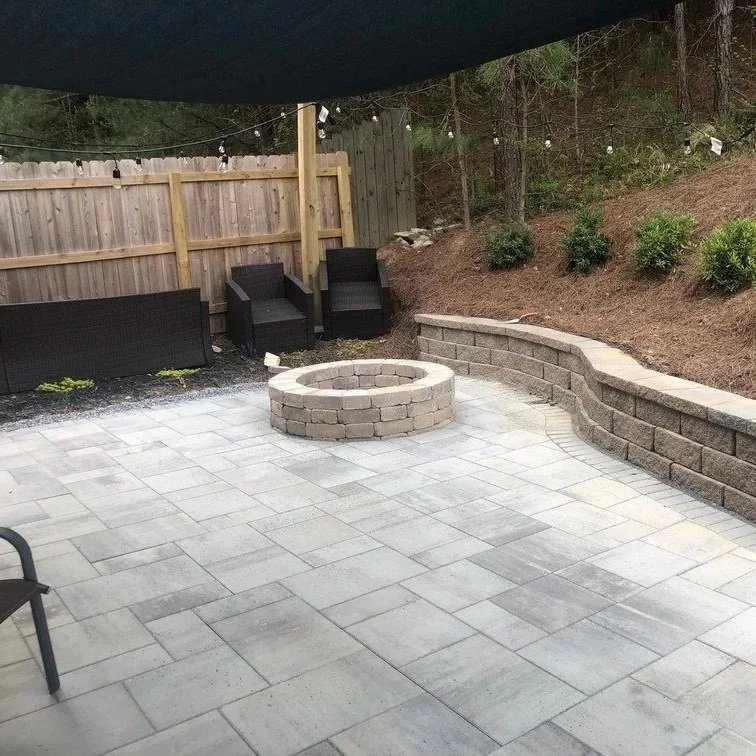
Pavers and Permeable Systems: Concrete or clay pavers offer stability and design versatility. Permeable pavers handle heavy rainfall, preventing puddling and erosion. Both options work well for patios and seating areas near the fire pit.
Gravel and Decorative Stone: Gravel or crushed stone provides flexible, low-cost groundcover that reduces flammability and enhances drainage. Decorative rocks can accent plantings and create textural contrast.
Brick and Reclaimed Materials: Brick suits traditional Georgia styles and can be used in pit construction and patios. Reclaimed brick or stone adds rustic charm, but all materials near flames must be non-combustible.
Concrete: Poured, stamped, or stained concrete allows custom shapes and textures. Proper installation, slip-resistant surfaces, and sealing protect against Georgia’s clay soil movement, weather, and summer heat.
Safe Planting Zones Around Fire Pits
Immediate No-Plant Zone (0–3 Feet): This buffer should be hardscape only—stone, pavers, or gravel—to minimize fire risk and allow safe movement.
Transition Zone (3–6 Feet): Low-growing, fire-resistant plants like perennials, ornamental grasses, and groundcovers work well here. High moisture content and low resin levels reduce flammability.
Outer Planting Zone (6+ Feet): Larger shrubs and small trees provide privacy, wind protection, and visual structure. Even here, pruning and plant placement remain critical to maintain safety and visibility.
Wind direction and slope also influence plant layout. Downwind areas benefit from non-flammable materials, while sloped sites may require terraces or retaining walls to create safe, level fire pit zones.
Best Shrubs, Trees, and Perennials for Georgia Fire Pit Areas
Evergreen Shrubs: Boxwood and hollies add year-round structure and color, forming low hedges and visually anchoring seating areas. Disease-resistant cultivars reduce maintenance and debris.
Flowering Shrubs: Hydrangea and abelia provide seasonal blooms and soften hardscape lines. Placing them a few feet from the fire keeps them safe from heat and sparks.
Small Ornamental Trees: Crape myrtle and Japanese maple offer vertical interest, partial shade, and a natural backdrop. Maintain proper clearance above flames for safety.
Screening Shrubs: Loropetalum and camellia provide privacy without blocking airflow, creating a lush, comfortable environment.
Perennials and Grasses: Heat-tolerant coneflowers, black-eyed Susans, and ornamental grasses provide color, movement, and texture. Groundcovers like creeping thyme reduce soil erosion while staying low and fire-wise.
Pollinator-Friendly Plants: Long-blooming perennials attract butterflies and bees, adding life to the space. Position these slightly farther from the seating to avoid interfering with relaxation.
Sun vs. Shade: Observe daily sun patterns to choose appropriate plants. Sun-loving species suit open patios, while shade-tolerant options thrive near trees or structures.
Groundcovers, Turf, and Mulch Considerations
Fire-wise groundcovers like creeping thyme and sedums are ideal for transition zones. Turfgrass—Bermuda, Zoysia, or fescue—can surround but should be kept well-watered, mowed, and away from direct flames. Mulch retains soil moisture but presents a fire hazard near the pit; use inorganic options like stone or gravel close to the fire, reserving organic mulches for outer zones.
Living or inorganic edging helps define the space, acting as a firebreak and keeping gravel or mulch in place. For example, a stone border around the pit combined with low plants just beyond creates a layered, safe design.
Non-Combustible and Heat-Resistant Fire Pit Components
Fire-rated materials are essential for the fire ring itself. Fire brick, heat-resistant blocks, or specified natural stone prevent cracking or dangerous reactions to intense heat. Caps and coping for walls or benches should stay comfortable in Georgia’s sunlight—light-colored stone and rounded edges help.
Metal elements such as bowls, screens, or accents add style but must resist rust and heat damage. Fire glass and lava rock offer visual interest for gas pits, while adhering to manufacturer guidelines ensures safe performance.
Complementary Seating, Lighting, and Décor
Choose seating materials suited to Georgia’s climate—masonry benches, metal chairs, or weather-resistant wicker. Maintain spacing for comfort and safety, leaving room for movement, plants, and side tables.
Pathways should be safe and cohesive with the overall design. Stone, pavers, or gravel work well with low-voltage or solar lighting for nighttime use. Containers and raised beds allow flexible plantings near seating without compromising fire safety. Outdoor rugs and cushions provide color and comfort but must remain a safe distance from flames.
Seasonal Planting and Maintenance Strategies
Spring: Refresh beds with early perennials, clean debris, and prep hardscapes.
Summer: Use heat-tolerant plants, shade structures, and careful watering. Remove dead foliage to reduce fire risk.
Fall: Highlight fall colors with late-blooming perennials and shrubs. Manage fallen leaves to maintain safe, attractive spaces.
Winter: Emphasize evergreens, structural shrubs, and decorative elements. Protect sensitive furniture and check fire pit components after occasional freezes.
Routine pruning, deadheading, and debris cleanup reduce fire hazards. Regular hardscape inspection and cleaning maintain safety and appearance. Safe fire pit operation, appropriate tools, and weather-aware maintenance rounds out responsible management.
Regional Fire Pit Inspiration in Georgia
Coastal Georgia: Salt-tolerant grasses, low shrubs, and light-colored stone complement sandy soils and breezy conditions. Durable furnishings and minimal maintenance ensure longevity.
Metro Atlanta Suburbs: Small yards benefit from compact, stylish outdoor rooms. Pavers, container plantings, and evergreen shrubs create functional, safe spaces.
North Georgia Mountains: Native evergreens, woodland perennials, and boulders produce rustic, woodsy fire pit settings. Clear leaf litter and manage surrounding vegetation for safety.
Rural and Lake Properties: Expansive terraces and generous planting zones create versatile, scenic spaces. Use wide gravel or stone areas with scattered seating, shade trees, and safe access to water or docks.
Conclusion: Creating a Georgia-Inspired Outdoor Retreat
A successful Georgia fire pit area balances plants, materials, and safety. Understanding climate, soils, and regional character informs plant choices, from no-plant buffers to outer shrubs. Non-combustible hardscape elements like stone, pavers, gravel, and fire-rated brick provide a solid foundation, while seating, lighting, and containers complete the design. By incorporating native species and seasonal updates, homeowners can create inviting outdoor spaces that thrive from spring through winter. Thoughtful planning and regular maintenance ensure fire pit retreats remain safe, comfortable, and distinctly Georgian.
FAQs
Avoid highly resinous, oily, or dry-prone plants, as well as species that drop large amounts of leaves or needles. Examples include pines and junipers directly near flames. Focus on fire-resistant, well-spaced species for immediate surroundings.
Maintain a 0–3 foot no-plant zone, a 3–6 foot transition zone with low, fire-resistant plants, and 6+ feet for larger shrubs or small trees. Distances may vary with fire pit size and fuel type, but these zones provide a practical safety framework.
Top materials include natural stone (flagstone, bluestone, fieldstone), pavers, gravel, and fire-rated brick. These resist heat, moisture, and occasional freezes, providing safe, durable surfaces for patios, seating areas, and walking zones.
Wood decks are risky near open flames. Gas fire pits may be used on decks with strict safety measures and barriers, but stone or paver patios remain the safest choice for frequent fires, particularly wood-burning units.
