Step-by-Step Guide to Installing a Retaining Wall in Gainesville, GA

Retaining walls are a common and often necessary feature for properties in Gainesville, Georgia. With the area’s rolling terrain, clay-heavy soils, and periods of heavy rain, many homeowners face erosion, uneven yards, or sloped areas that are difficult to use or maintain. A properly built retaining wall helps hold soil in place, manages grade changes, and creates flat, usable spaces for gardens, patios, walkways, or lawns. While retaining walls can enhance curb appeal, they are, first and foremost, structural elements, and their performance depends on proper planning, drainage, and construction.
Why Retaining Walls Matter in Gainesville
In Gainesville, retaining walls play a particularly important role because of the common slopes and elevation changes throughout Hall County. Seasonal storms can move large amounts of water across a yard in a short time, washing out soil and undermining foundations, driveways, and landscaping. A well-designed wall reduces these risks, protects the home, and often lowers long-term maintenance costs by stabilizing the property.
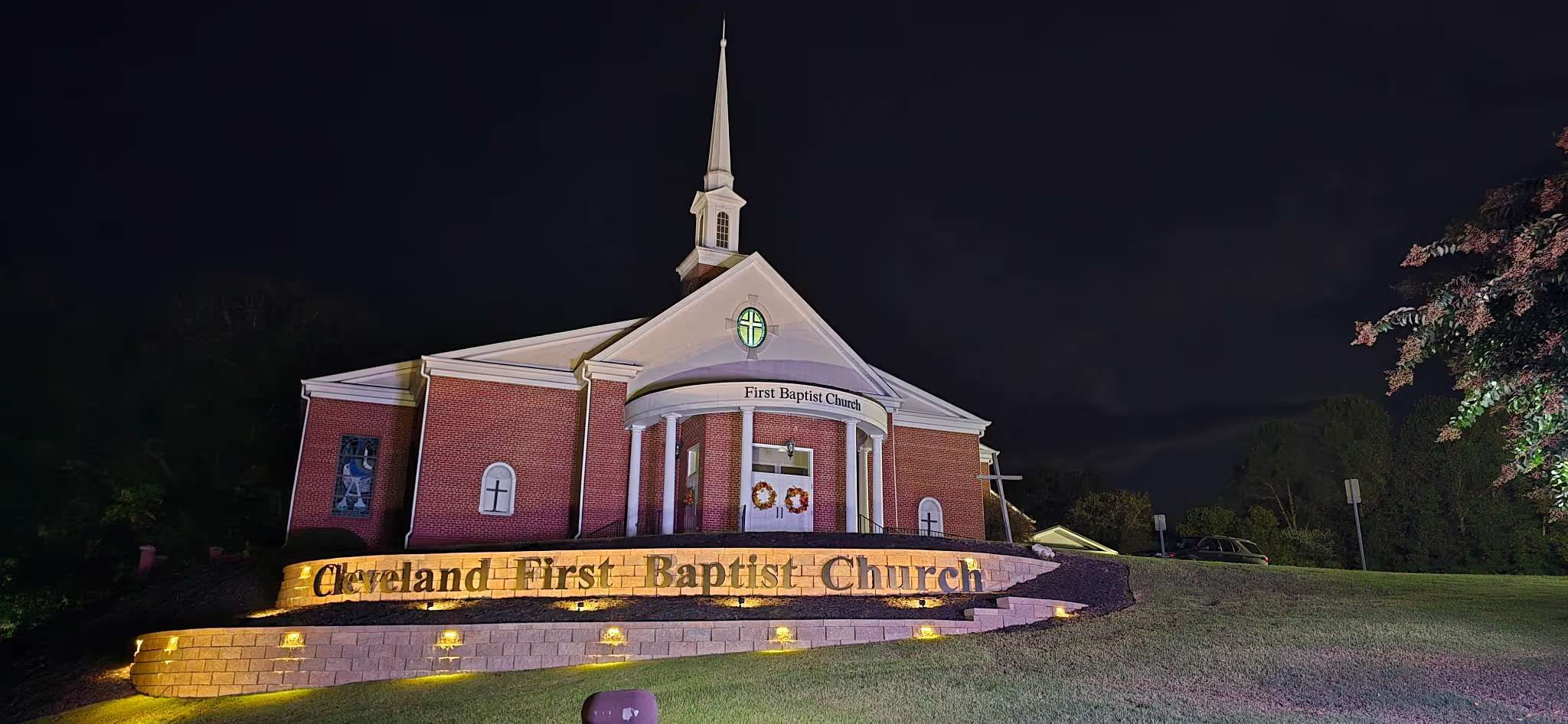
Several types of retaining walls are commonly used in North Georgia. Gravity walls rely on their own weight to hold back soil and are often built from segmental concrete blocks or large stone. Segmental concrete block walls are especially popular for residential projects because they interlock without mortar, allow built-in drainage, and can follow curves or terraces. Timber walls are sometimes used for lower walls due to their lower upfront cost, but in Georgia’s humid climate, they are more prone to rot and insect damage. Poured concrete and CMU walls are strong and durable but usually require professional installation and careful engineering, especially for taller walls.
Gainesville’s climate and terrain directly affect how retaining walls should be built. Warm, humid summers, frequent heavy rains, and occasional winter freezes create repeated wet-dry and freeze-thaw cycles. These conditions increase hydrostatic pressure behind walls and contribute to soil movement. Clay soils, common in Hall County, expand when wet and shrink when dry, placing additional stress on any structure holding them back. Because of this, drainage, base preparation, and reinforcement are critical to long-term wall performance.
When a Retaining Wall Becomes a Structural Necessity
In some situations, a retaining wall is more than a landscaping upgrade and becomes a safety or structural necessity. Steep slopes near foundations, driveways, sidewalks, or parking areas can create serious risks if soil begins to move. Signs such as slumping ground, leaning fences, or exposed roots indicate instability that should be addressed promptly. Taller walls or those supporting loads must be approached carefully and often require professional design.
Before deciding to build the wall yourself, evaluate whether the project is appropriate for DIY. Small garden walls or low retaining walls under three feet are often manageable for experienced homeowners. Taller walls, walls supporting driveways, or those built on steep slopes are usually best handled by a professional contractor or engineer. Local Gainesville contractors bring valuable knowledge of soil conditions, codes, and drainage practices, while DIY projects can save money if done correctly. Being realistic about skill level, tools, and time is essential.
Permits, Codes, and Property Considerations
Checking local codes and permits is a required early step. The City of Gainesville and Hall County have regulations that may require permits based on wall height, location, and function. Walls near structures, property lines, or public areas often face stricter requirements. Permit information can be obtained through local building and planning departments, and skipping this step can lead to fines or forced removal.
Property lines, setbacks, and easements must also be confirmed. Retaining walls placed too close to boundaries or within utility or drainage easements can create legal and practical problems. A survey or plat map helps ensure correct placement before construction begins. Many jurisdictions also require engineering for walls over a certain height, commonly around four feet, or for walls carrying additional loads.
Before digging, calling 811 to locate underground utilities is critical. Gas, water, electrical, and communication lines may run through the planned wall area. Utility marking protects safety and prevents costly damage. Homeowners should also identify private lines, such as irrigation or lighting.
Site Evaluation and Design Planning
Evaluating the site begins with observing the slope and drainage patterns. Walking the yard during or after a rainstorm reveals how water moves and where erosion occurs. Sketching a simple site plan with elevations, structures, and drainage paths helps guide wall layout and drainage design. Understanding whether the soil is primarily clay, sand, or loam also informs decisions. Clay-heavy soil holds water and increases pressure, so clean gravel backfill is almost always preferred behind the wall.
Accurate measurement of wall height and length is essential. Grade changes should be measured along the entire wall run, not just at one point. Steep slopes may require stepped or terraced walls rather than one tall structure. Access for excavation and material delivery should be considered early, especially on smaller lots where equipment access is limited.
Choosing the right wall material balances cost, appearance, and longevity. Segmental concrete block systems are often ideal for Gainesville because they handle drainage well, allow minor ground movement, and are widely available. Timber walls may cost less upfront, but generally have shorter lifespans. Poured concrete and CMU walls offer strength, but at a higher cost and complexity. Natural stone walls provide a rustic look but require skill and careful drainage planning.
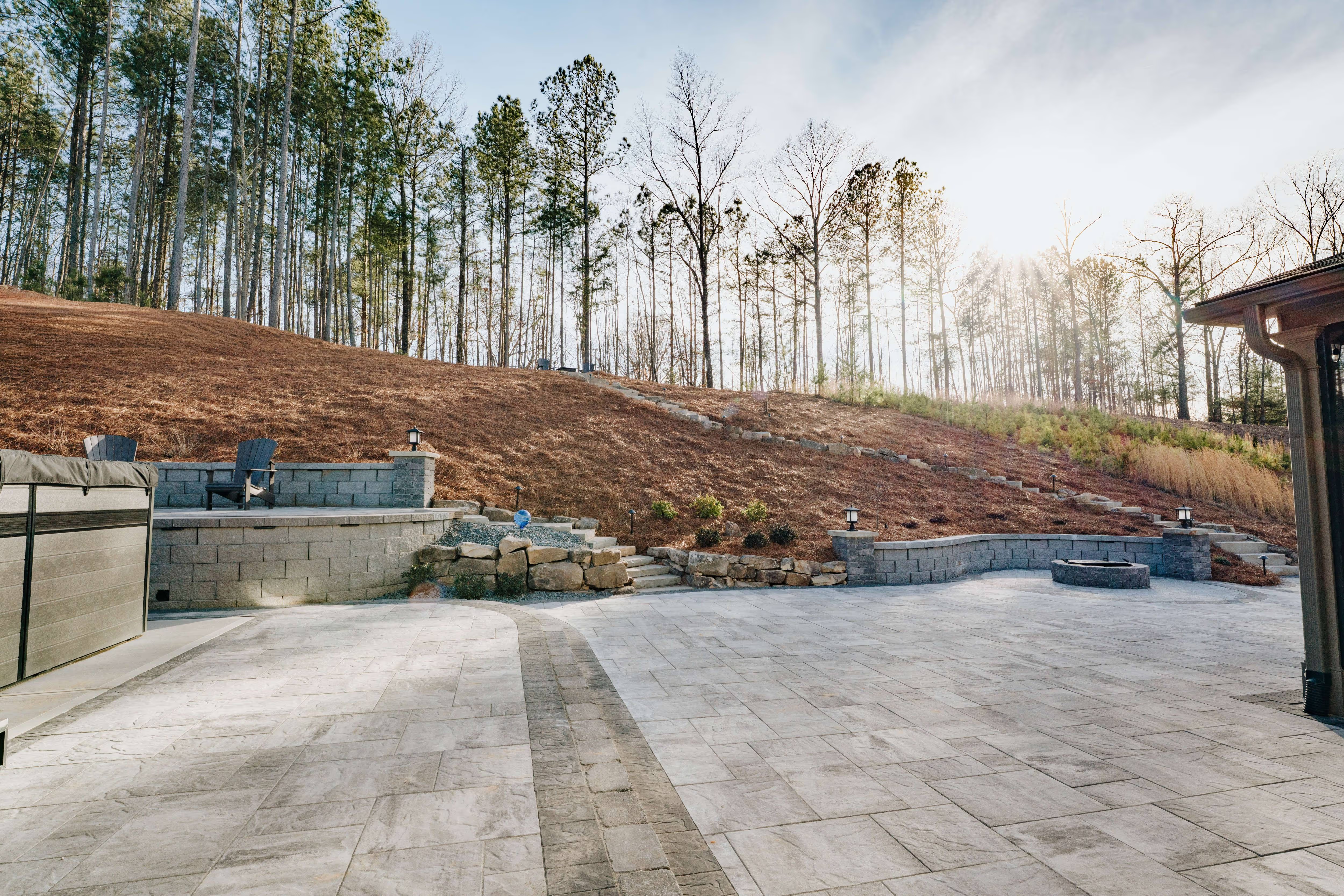
Designing the wall layout involves creating a scaled plan, choosing straight or curved sections, and deciding whether terracing is needed. Steps, paths, and access points should be incorporated into the design from the beginning. Drainage must be planned as part of the layout, with space for gravel backfill, perforated drain pipe, and outlets for water to exit safely. Future landscaping or patios should also be considered so the wall supports long-term plans.
Construction and Drainage Essentials
Installing the wall begins with marking the layout and excavating a trench for the base. The trench must be wide and deep enough to support the wall and allow for compacted base material. A level, well-compacted gravel base is one of the most important factors in wall success. The first course of blocks or timbers must be set perfectly level and aligned, as mistakes here multiply in higher courses.
As the wall rises, joints should be staggered, alignment checked frequently, and proper batter maintained. For timber walls, deadmen or tie-backs may be required for stability. Corners, curves, and steps must be integrated carefully to maintain strength and appearance.
Drainage installation happens as the wall is built. A perforated drain pipe is placed at the base behind the wall, sloped toward an outlet. Clean gravel backfill is added in lifts, often separated from native soil by geotextile fabric to prevent clogging. Proper drainage reduces hydrostatic pressure and protects the wall from failure.
For taller walls or walls supporting heavy loads, geogrid reinforcement may be required. Geogrid layers extend back into the soil and are installed according to manufacturer or engineering specifications. Driveways, patios, and structures near the top of the wall increase loads and often require professional design.
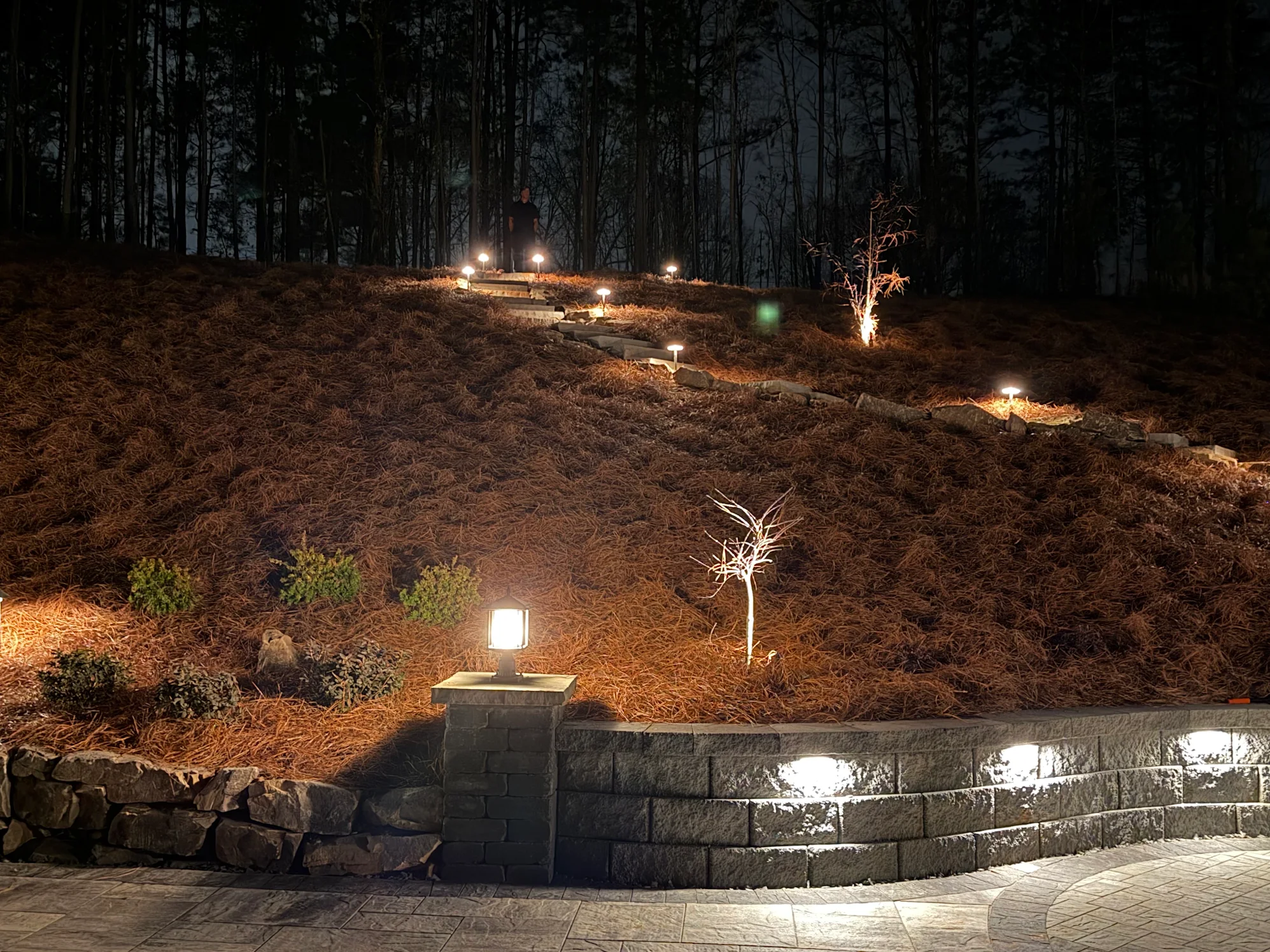
Finishing steps include installing cap blocks, final grading above and below the wall, and stabilizing disturbed soil with seed, sod, or mulch. Optional sealing may help reduce staining or moisture absorption for some materials. Landscaping and lighting can soften the wall’s appearance and improve safety and usability.
Maintenance and Long-Term Performance
Ongoing maintenance includes periodic inspections for movement, clogged drains, or erosion. Vegetation should be managed so that roots do not interfere with the wall or drainage. Small issues addressed early are far easier and less expensive to fix than major structural problems.
Conclusion
Installing a retaining wall in Gainesville, GA requires careful planning, respect for local conditions, and attention to detail at every stage. From understanding soil behavior and drainage needs to selecting the right materials and following proper construction steps, each decision affects the wall’s long-term performance. While many smaller walls can be successful DIY projects, taller or more complex walls often benefit from professional design and installation. When built correctly, a retaining wall becomes a lasting investment that enhances safety, usability, and property value in Gainesville.
Rooted Landscape Management offers professional hardscaping solutions to Gainesville, Georgia, residents. From hardscape design and installation, retaining walls, and paver installations, to fire pits, our team works together with you to transform your yard. Add privacy and interest and define your outdoor spaces with our professional team. Call us for a free estimate.