
When Should You Repair vs Replace a Retaining Wall in Gainesville, GA?
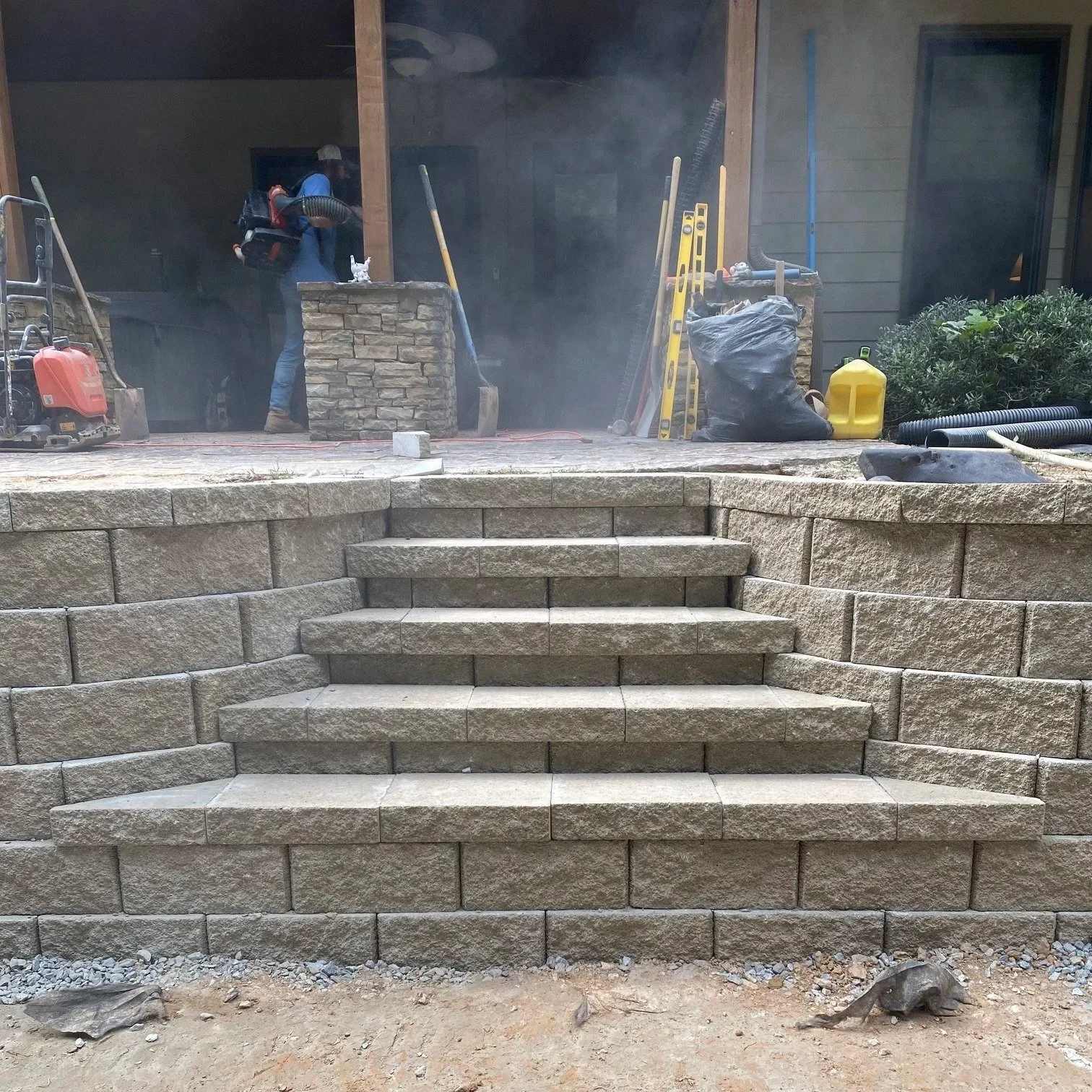
Assessing structural damage on a North Georgia retaining wall to determine if soil pressure requires a full replacement or repair.
Understanding Retaining Walls in Gainesville, GA
What a Retaining Wall Does and Why It Matters
A retaining wall is designed to hold back soil, manage elevation changes, and prevent erosion. On residential and commercial properties, these walls help stabilize hillsides, support driveways and patios, protect foundations, and create flat, usable outdoor spaces. Beyond structure, they also play a big role in curb appeal and landscape design, turning steep or awkward terrain into functional areas.
In Gainesville, GA, retaining walls carry even more responsibility. The area’s rolling terrain, clay-heavy soils, and frequent rainfall mean that slopes are constantly under pressure from water and soil movement. A well-built retaining wall here protects not only landscaping but also nearby structures, roadways, and, in some cases, neighboring properties. When a wall starts to fail, the consequences can escalate quickly due to these local conditions.
Common Types of Retaining Walls in Gainesville
Most Gainesville properties feature one of several common retaining wall types. Older homes often have timber or railroad tie walls, while newer residential projects frequently use modular concrete block systems. Poured concrete walls are common in commercial or load-bearing applications, and natural stone or brick veneer walls are often chosen for aesthetics in higher-end landscapes.
Each material ages differently, which directly affects whether repair or replacement makes sense. Timber walls rot and warp over time, concrete can crack and spall, and block walls may bulge if drainage is inadequate. Identifying the wall type is the first step toward making a sound repair-versus-replace decision.
Local Soil and Weather Conditions in Gainesville, GA
Gainesville’s red clay soils expand when wet and shrink when dry, creating fluctuating pressure on retaining walls throughout the year. Heavy rain events, stormwater runoff, and seasonal moisture changes place constant stress on wall systems. Occasional freeze-thaw cycles, while not extreme, can further widen cracks and weaken materials.
Because of these conditions, even a properly built wall may experience problems sooner in certain locations, such as at the base of steep slopes or in areas with poor drainage. Understanding how soil and weather affect your wall helps determine whether repairs can realistically extend its life or whether replacement is the safer long-term option.
Typical Lifespan of Retaining Walls by Material
In Gainesville’s climate, timber retaining walls often last 10 to 20 years. Modular concrete block walls can last more than 30 years when installed properly and drained properly. Poured concrete walls can last 40 years or more, and natural stone walls may last even longer if well-maintained. These estimates assume good design, construction, and upkeep.
Knowing the expected lifespan helps frame the decision. A 20-year-old timber wall showing movement is often a better candidate for replacement, while a relatively young block wall with localized issues may be worth repairing. Age and condition should always be evaluated together.
Why the Repair vs Replace Decision Matters
Choosing between repair and replacement affects cost, disruption, safety, and long-term reliability. Repairing a wall can be less expensive upfront and less disruptive to landscaping, but patching a wall that is fundamentally failing can lead to higher costs if it collapses later.
Safety and liability are also key considerations. A failing wall can injure people, damage nearby structures, or undermine driveways and foundations. In Gainesville’s conditions, making the right decision early can protect property value and prevent serious problems down the line.
Recognizing Early Warning Signs of Retaining Wall Failure
Visible Cracks: Hairline vs Structural
Small hairline cracks are often cosmetic and related to minor settlement or material shrinkage. Larger cracks, especially horizontal or stair-step patterns, may indicate structural stress. Cracks commonly appear on the wall face, near corners, or along mortar joints.
Cracks that remain stable can often be sealed and monitored. Cracks that widen, multiply, or shift position suggest deeper problems and may indicate replacement, especially when combined with other signs such as leaning or drainage issues.
Leaning, Bulging, or Bowing Walls
A wall that leans outward, bulges in the middle, or bows along its length is usually responding to excessive soil pressure or poor drainage. Mild movement may sometimes be stabilized, but severe displacement often means the wall is nearing the end of its service life.
In Gainesville’s wet climate, these signs are especially concerning because saturated clay soils can accelerate movement quickly. Leaning or bulging walls should be evaluated promptly.
Shifting or Loose Wall Blocks
Individual blocks or stones may tilt, shift, or loosen due to soil movement or poor base preparation. If movement is isolated, re-leveling and resetting blocks can be effective. When shifting is widespread or recurring, the problem is usually deeper and may require rebuilding.
Drainage Problems and Water Stains
Water staining, damp areas, or seepage through joints indicate drainage failures. Clogged or missing weep holes and failed French drains are common culprits. Drainage issues are often repairable early, but long-term water problems that undermine the base may push the decision toward replacement.
Soil Erosion and Washouts
Erosion at the base or behind the wall, sinkholes, or visible voids in backfill signal serious instability. Minor erosion can sometimes be corrected, but extensive or ongoing soil loss often makes repair unreliable.
Common Causes of Retaining Wall Damage in Gainesville
Poor drainage design is the leading cause of wall failure. In Gainesville, clay soils and heavy rainfall make proper drainage essential. Construction errors such as inadequate footing depth, poor compaction, or missing reinforcement also contribute to early failure. Tree roots, landscaping changes, soil settlement, and natural material deterioration further complicate repair decisions as walls age.
When a Repair May Be the Right Choice
Repair is often appropriate when damage is cosmetic, localized, or related to correctable drainage issues. A structurally sound wall with small cracks, minor staining, or limited block movement can often be repaired effectively. Younger walls within their expected service life are strong candidates for repair, especially when the root cause is addressed.
In some cases, budget-conscious repairs can safely extend a wall’s life while planning for future replacement. These repairs must still meet safety standards and should be guided by a professional assessment.
When Full Replacement Is the Better Option
Replacement is usually the better choice when walls show severe leaning, widespread cracking, advanced material deterioration, or repeated repair failures. Timber walls with extensive rot, walls undersized for current loads, and walls built to outdated standards often cannot be repaired reliably.
Replacing a wall allows for an updated design, improved drainage, and materials better suited to Gainesville’s conditions. While more expensive upfront, replacement often provides better long-term value and safety.
Cost Comparison: Repair vs Replacement in Gainesville
Repairs range widely depending on scope, from relatively affordable cosmetic fixes to more involved partial rebuilds. Replacement costs are driven by wall height and length, material choice, site access, engineering needs, and demolition requirements.
Although replacement costs more initially, it can reduce long-term spending on recurring repairs and maintenance. Evaluating lifecycle cost rather than just upfront expense leads to better decisions.
Safety, Liability, and Structural Risk
Failing walls pose real safety risks, including collapse and soil movement that affects nearby structures. Homeowners and landlords may face liability if known hazards cause injury or damage. Walls showing rapid movement, large cracks, or soil loss should be evaluated immediately by professionals.
Engineering evaluations and permits may be required for taller or load-bearing walls in Gainesville and Hall County. These steps ensure safety and compliance and help clarify whether repair or replacement is appropriate.
DIY Repair vs Hiring a Professional
Minor tasks like sealing small cracks or clearing weep holes can be DIY-friendly. Professionals should handle structural work, straightening walls, or rebuilding sections. A qualified Gainesville contractor can explain repair and replacement options honestly and help homeowners make informed decisions.
Extending the Life of a Repaired or New Retaining Wall
Regular inspections, proper drainage management, thoughtful landscaping, and avoiding added loads above the wall all help extend lifespan. Planning for future property changes and coordinating with professionals ensures today’s solution remains effective long term.
Conclusion
Deciding whether to repair or replace a retaining wall in Gainesville, GA, depends on condition, age, materials, design, and local soil and weather factors. Early warning signs like cracks, leaning, drainage problems, and erosion should never be ignored. Repairs and replacements both have valid roles when chosen thoughtfully.
The best decision balances safety, cost, and long-term performance. Working with experienced local contractors and, when needed, engineers ensures your retaining wall continues to protect your property, preserve value, and perform reliably in Gainesville’s challenging environment.
FAQs
Walls with minor, localized issues or correctable drainage problems are often repairable. Severe leaning, widespread damage, or advanced material deterioration usually point toward replacement. A professional assessment provides clarity.
Costs vary based on wall size, material, damage extent, access, and engineering needs. Minor repairs cost significantly less than full replacement, but repeated repairs can exceed replacement costs over time.
Permit requirements depend on wall height, location, and load. Taller or load-bearing walls often require permits and engineered plans. Local contractors can help navigate requirements.
Timber walls often last 10–20 years, modular block and poured concrete walls 30–40+ years, and natural stone walls even longer with good maintenance. Proper drainage and inspections greatly extend the lifespan.
