
The Benefits of Interlocking Concrete Block Walls for Gainesville Yards
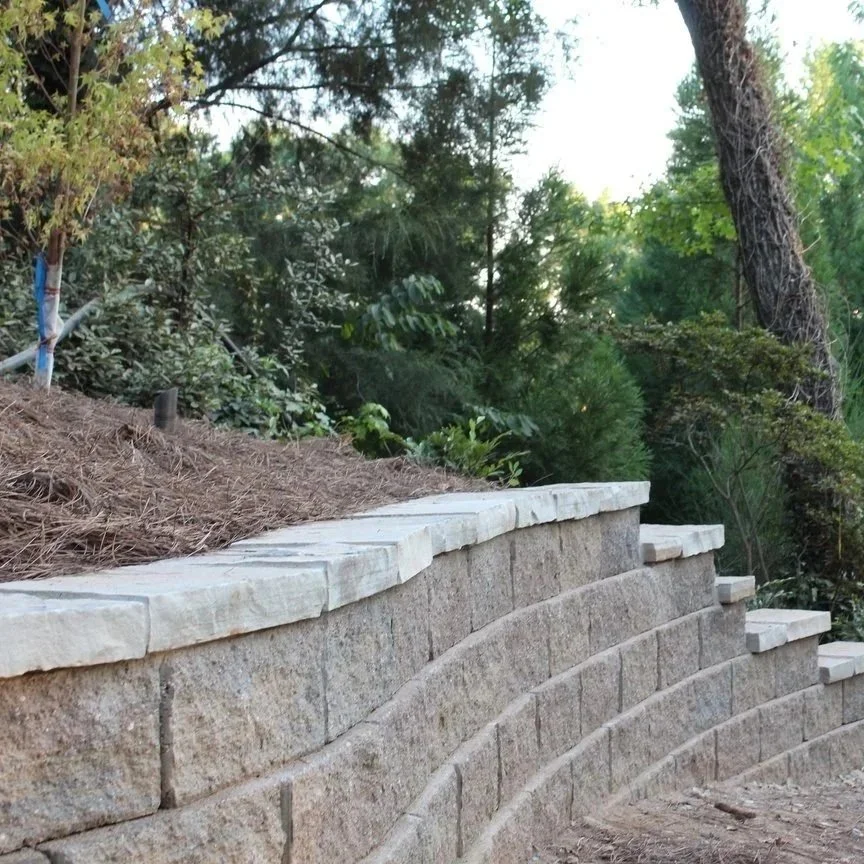
Interlocking concrete blocks provide a durable, mortar-less solution for building stable and attractive retaining walls in Gainesville landscapes.
Interlocking concrete block walls have become one of the most popular retaining and landscape wall solutions for Gainesville homeowners, and for good reason. These systems use individual precast concrete blocks that fit together like a puzzle, relying on their shape, weight, and friction rather than traditional mortar. When assembled over a properly prepared base and supported with gravel backfill, they form a strong, flexible wall that can serve structural and decorative purposes.
In Gainesville, these walls are commonly used to terrace sloped yards, frame planting beds, create seating walls, and define outdoor living areas. They work equally well in established neighborhoods with mature trees and in newer developments with engineered landscapes. Because they are modular and adaptable, interlocking block walls offer practical solutions for many of the region’s common yard challenges, especially those related to soil movement and heavy rain.
One reason these systems are so popular across North Central Florida is their ability to balance performance, appearance, and cost. Compared to poured concrete or timber walls, interlocking block walls are typically faster to install, visually appealing, and easier to maintain over time. They also perform well under Gainesville’s weather patterns, which include frequent thunderstorms, high humidity, and long rainy seasons. For homeowners looking to improve both functionality and curb appeal, they are often a natural fit.
Unlike traditional brick-and-mortar walls or monolithic poured concrete, interlocking systems are built block by block, with no rigid joints. Stability comes from gravity, friction, and engineered geometry rather than a single solid mass. This difference matters in real-world conditions. If a block wall is damaged, individual units can usually be replaced without tearing down the entire structure. The system also adapts better to minor ground movement, which is especially helpful in Gainesville’s mix of sandy and clay-rich soils.
Why Interlocking Block Walls Perform Well in Gainesville
At a high level, the benefits of interlocking concrete block walls fall into three categories: strong structural performance, long-term durability, and design flexibility that enhances curb appeal. Each of these advantages becomes even more meaningful when viewed through the lens of Gainesville’s climate and landscape conditions.
Gainesville’s humid subtropical climate brings high annual rainfall, intense downpours, and warm temperatures most of the year. These conditions can create drainage problems, erosion, and shifting soil on residential lots. Local soils vary from free-draining sand to heavier clay pockets that expand and hold moisture. Interlocking block walls are engineered to manage water movement and withstand small ground shifts, making them well-suited to this environment.
Structurally, interlocking block walls are designed to withstand soil pressure and loads from above, such as patios, lawns, or nearby driveways. The blocks themselves are heavy and shaped to lock together, forming a stable mass that resists sliding and overturning. For taller walls or steeper slopes, geogrid reinforcement can be added to tie the wall face back into the soil, creating a reinforced system capable of handling significant loads safely.
The interlocking mechanism is a key part of this performance. Lips, pins, or specialized block profiles ensure each course aligns correctly and contributes to the wall's overall strength. Because these walls function as gravity systems, they rely on mass and geometry rather than rigid connections. On Gainesville properties, this means a well-designed block wall can perform reliably on typical residential slopes without the brittleness associated with some traditional wall types.
Another major advantage is resistance to cracking and heaving. Poured concrete walls can develop long, visible cracks if the ground settles or shifts. Interlocking block walls, by contrast, are segmented. Small movements are absorbed across joints rather than concentrated in one place. Gainesville’s wet and dry cycles, root growth, and minor soil changes are less likely to cause noticeable damage, reducing the need for structural repairs.
Managing Slopes, Erosion, and Drainage
Sloped and uneven yards are common throughout Gainesville, and interlocking systems are particularly effective in these situations. Walls can be stepped, curved, or tiered to follow natural contours. A steep, hard-to-maintain slope can be transformed into a series of usable terraces for patios, gardens, or lawns. This flexibility allows homeowners to reclaim space that would otherwise be difficult to mow or enjoy.
Erosion control is another significant benefit. Heavy rains can quickly wash away unprotected soil, especially on side yards, driveway edges, and planting beds. Interlocking concrete block walls hold soil in place and slow runoff, helping prevent washouts. When combined with groundcovers or mulch, they protect landscaping investments and reduce post-storm cleanup.
Terracing with multiple shorter walls further improves water management. Each terrace slows runoff and allows more water to soak into the ground instead of rushing downhill. In Gainesville yards, these terraces often double as planting beds or garden areas, adding both beauty and function while reducing standing water at the base of slopes.
Drainage performance is one of the most essential advantages of interlocking block walls. These systems are designed to work with clean stone backfill and drainpipes that move water away from the wall. Open joints and gravel zones relieve hydrostatic pressure instead of trapping it. In Gainesville’s rainy environment, this built-in drainage is critical to preventing bulging, leaning, or failure over time.
Interlocking walls can also be integrated into broader drainage strategies to direct surface water toward swales, French drains, or rain gardens. By reshaping the yard and controlling water paths, homeowners can eliminate soggy areas, protect foundations, and reduce mosquito-friendly standing water.
Durability, Design, and Long-Term Value
Durability is another reason these walls perform so well locally. Interlocking blocks are made from high-strength concrete formulated for outdoor exposure. They do not rot, attract insects, or decay like timber walls. Gainesville’s humidity and termite pressure make this a significant advantage, reducing long-term maintenance concerns.
These blocks also perform well under UV exposure and constant moisture. While some surface fading may occur over many years, structural integrity remains strong. Proper base preparation and drainage minimize settlement, even in soils that include both sand and clay. With correct installation, these walls often last several decades or longer.
From a design perspective, interlocking concrete block walls offer impressive flexibility. Manufacturers provide a wide range of colors, textures, and profiles, from smooth modern finishes to tumbled, stone-like appearances. Homeowners can choose styles that complement brick homes, stucco exteriors, or natural landscapes common in Gainesville.
Because the blocks are modular, walls can be straight, curved, or tiered. They can wrap around patios, frame circular planting beds, or create sweeping seat walls around fire pits. Interlocking systems often coordinate with matching pavers, allowing patios, steps, and walls to share a consistent material palette for a polished look.
Functionally, these walls help optimize space. Slopes can become level play areas, garden terraces, or seating zones. Low walls define outdoor rooms without fencing, while taller walls create clear transitions between activity areas. Built-in seating, raised planters, and integrated steps further increase usability, especially in smaller Gainesville yards.
Cost-wise, interlocking block walls typically fall between basic timber walls and high-end custom masonry. While the initial investment may be higher than wood, long-term savings are significant. There is no rot, minimal maintenance, and damaged blocks can often be replaced individually. Over time, this modular repairability reduces repair and replacement costs.
Interlocking walls also add to perceived property value. Buyers often appreciate stable, attractive landscapes with usable outdoor space and well-managed slopes. In competitive Gainesville markets, quality hardscaping can help a property stand out.
Installation is generally faster than traditional masonry because blocks are uniform and mortar-free. This reduces on-site time and disruption, especially during Gainesville’s rainy seasons. Many residential projects can be completed with limited heavy equipment, preserving existing landscaping.
Maintenance is straightforward. Annual inspections for leaning, erosion, or clogged drains are usually sufficient. Occasional cleaning for algae or stains keeps walls looking fresh. Vegetation should be managed so roots do not disturb joints or trap moisture. Minor settling can often be corrected early without major work.
Environmentally, these walls help reduce soil erosion and sediment runoff, protecting local waterways. Their long lifespan means fewer replacements and less material waste over time. When paired with native or drought-tolerant plantings, interlocking walls support sustainable, low-maintenance landscapes well suited to Gainesville.
Compared to timber walls, interlocking concrete blocks offer far greater durability and require less maintenance in humid conditions. Compared to poured concrete, they provide better adaptability to soil movement and more design options. Compared to natural stone, they deliver a similar aesthetic with more predictable engineering and cost control.
Local codes and permits may apply to taller walls or those supporting structures, so professional guidance is essential. Gainesville homeowners should work with contractors experienced in segmental retaining walls and familiar with local soils and regulations. Professional design and installation ensure the wall performs as intended for decades.
Conclusion
Interlocking concrete block walls address Gainesville’s most common landscape challenges head-on. They manage heavy rainfall, accommodate mixed soils, control erosion, and adapt to sloped yards without the cracking and decay seen in many traditional systems. Their structural strength, built-in drainage, and modular flexibility make them one of the most reliable retaining wall options for residential properties.
Beyond performance, these walls offer design freedom, space optimization, and long-term value. They transform unusable slopes into functional terraces, define outdoor living areas, and enhance curb appeal with minimal ongoing maintenance. For Gainesville homeowners seeking a durable, attractive, and cost-effective solution, interlocking concrete block walls are often an ideal choice when properly designed and installed by qualified local professionals.
FAQs
With proper installation and drainage, interlocking concrete block walls often last several decades or longer, even in Gainesville’s humid, rainy conditions.
Walls above certain heights or supporting structures, such as driveways, often require permits and may require engineering. Local requirements vary, so it’s important to check with the city or county.
Small, low walls can sometimes be DIY projects, but walls that retain significant soil or are built on slopes should be professionally designed and installed for safety and code compliance.
They usually cost more than basic timber walls upfront, but less than many poured concrete or custom stone walls. Over time, lower maintenance and repair costs often make them a better value.
