
Safety and Code Requirements for Retaining Walls in Gainesville, GA
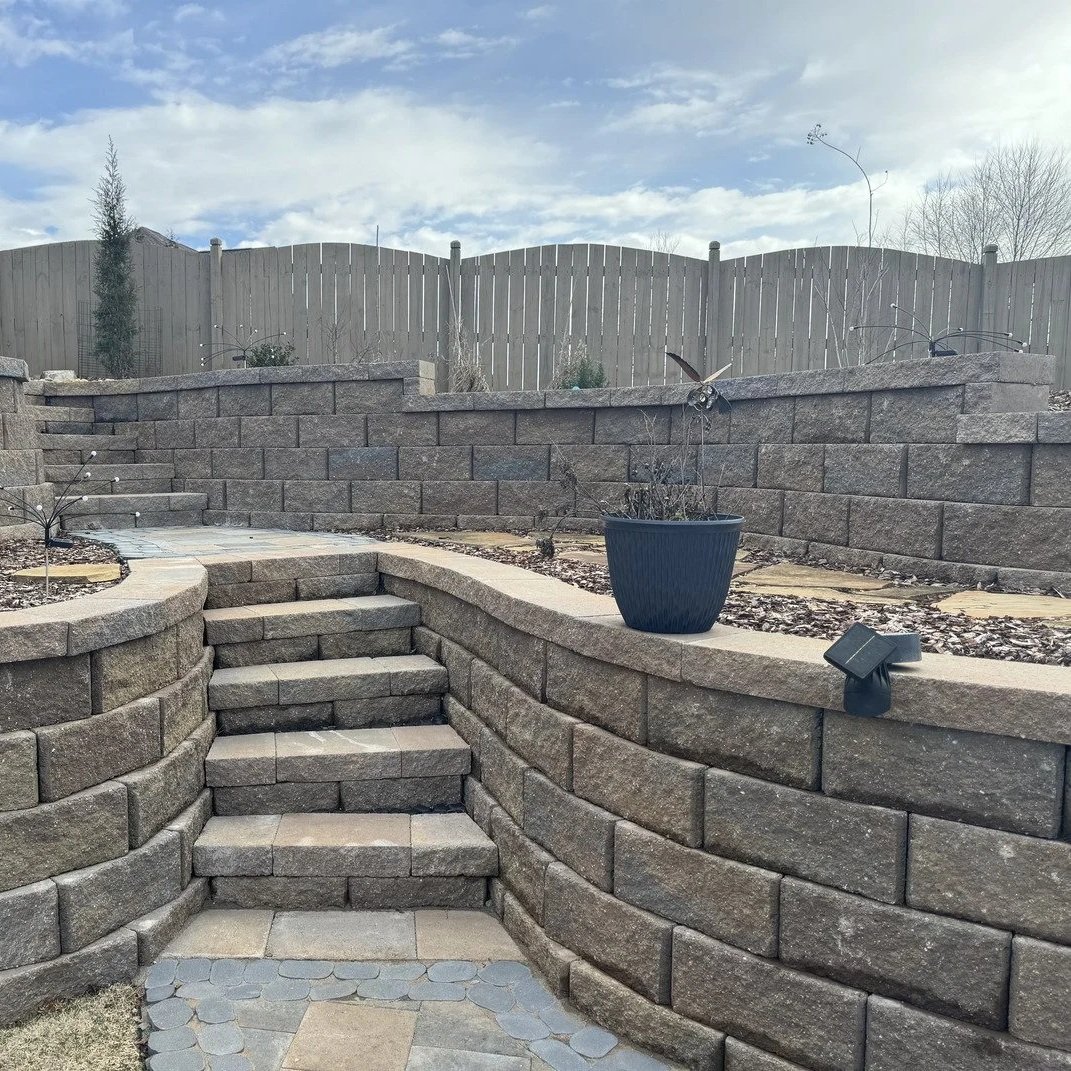
A standard engineering design for a retaining wall highlighting the critical drainage and footing components required by local building codes.
Retaining walls are a common feature across Gainesville, GA, especially on sloped residential lots, commercial properties, and areas where elevation changes would otherwise cause erosion or instability. While these walls often contribute to landscaping and curb appeal, they are first and foremost structural systems. Because failure can lead to property damage, injury, or even legal liability, safety standards and building codes play a central role in how retaining walls must be designed and built in Gainesville.
Understanding Retaining Walls and Why Codes Matter in Gainesville, GA
A retaining wall is a structure designed to hold back soil and stabilize elevation changes. In Gainesville, retaining walls are frequently used to manage steep yards, support driveways cut into hillsides, create terraced landscaping, and protect foundations from soil movement. These applications go far beyond decorative garden borders. Any wall that resists soil pressure is performing a structural function, regardless of how attractive it may look on the surface.
From an engineering perspective, all retaining walls must resist lateral earth pressure, manage water that accumulates behind the wall, and stabilize slopes or grade transitions. Gravity walls rely on their weight; cantilevered walls use reinforced concrete and footings; segmental block walls rely on interlocking units and soil reinforcement; and timber walls use mass and anchoring. Although construction methods vary, the safety goal remains the same: keeping soil in place in a predictable, controlled way. That is why building codes and safety standards are not optional guidelines but minimum requirements.
Unique site conditions in Gainesville further increase the importance of code compliance. Much of the area has clay-heavy soils mixed with rock or fill, which can expand when wet and exert additional pressure on walls. Seasonal rainfall and intense storm events can saturate soils quickly, increasing hydrostatic pressure behind retaining walls. Local codes reflect these realities by emphasizing drainage, footing depth, and structural stability. Ignoring these conditions can result in walls that look fine initially but fail over time.
Building codes exist to protect people, property, and neighboring land. In Gainesville, retaining wall regulations help prevent collapses, landslides, and damage near homes, sidewalks, and roadways. The consequences of ignoring code requirements are very real. Walls that lean, bulge, or fail can cause injuries, damage nearby structures, lead to insurance disputes, and create legal exposure for property owners. In most cases, building correctly from the start is less expensive than repairing or replacing a failed wall later.
Local Code Framework for Retaining Walls in Gainesville, GA
Gainesville and Hall County follow Georgia’s adopted versions of the International Building Code and International Residential Code, along with local amendments. These codes establish when retaining walls require permits, engineering, inspections, and specific construction details. Local amendments may adjust height thresholds, setbacks, or documentation requirements, so it is always important to confirm current rules with the appropriate building department.
A key distinction in the code is whether a wall is considered decorative or structural. Small landscape walls that are low in height and do not support slopes or loads may fall outside strict structural requirements. Once a wall retains a meaningful amount of soil, supports a driveway or building, or poses a hazard if it fails, it is typically classified as a structural retaining wall. In Gainesville, walls around four feet or taller, measured from the bottom of the footing to the top, commonly trigger engineering and permitting requirements.
Tiered or terraced walls deserve special attention. Some homeowners assume that multiple shorter walls avoid height limits, but codes often treat closely spaced tiers as a single system. If the horizontal distance between tiers is insufficient, inspectors may evaluate the combined height and stability rather than each wall individually.
Setbacks also matter. Retaining walls must be located far enough from property lines, buildings, and public rights-of-way to avoid overloading adjacent land and to allow for maintenance access. Underground utilities further complicate placement, which is why calling 811 before design and excavation is essential. Zoning rules, easements, and HOA guidelines may add restrictions on top of building code requirements.
Permitting Requirements for Retaining Walls in Gainesville, GA
A permit is commonly required when a retaining wall exceeds a certain height, supports surcharge loads such as driveways or buildings, or is adjacent to public sidewalks or roads. Surcharge loads significantly increase soil pressure and almost always push a wall into the engineered construction category. Homeowners should never assume a wall is exempt based solely on visible height.
Permit applications typically require a site plan showing property lines, existing grades, wall location, height, and drainage paths. Construction details are also required, including footing dimensions, reinforcement, wall type, and drainage systems. For taller or more complex walls, stamped drawings and calculations from a Georgia-licensed engineer are usually mandatory. In some cases, soil reports may be requested.
Once submitted, plans go through a review process that may involve requests for clarification or revisions. Fees vary depending on project size and complexity. Approved permits come with inspection requirements, often including footing inspections, mid-construction checks of reinforcement and drainage, and final inspections once the wall is complete.
Building without a required permit can result in fines, stop-work orders, forced removal, and complications when selling or insuring the property. Retroactive permitting is often difficult and costly, sometimes requiring invasive evaluations or reconstruction. Permitting should be viewed as part of building safely and legally, not as an obstacle.
Engineering and Design Standards for Safe Retaining Walls
Engineers play a central role in retaining wall safety. Structural engineers analyze loads and design walls to resist sliding, overturning, and bearing failure. Geotechnical engineers evaluate soil conditions, groundwater, and slope stability. Their input ensures that wall dimensions, reinforcement, and drainage systems are appropriate for the specific site.
Engineers check three primary failure modes. Sliding occurs when soil pressure pushes the wall forward. Overturning happens when the wall rotates due to unbalanced forces. Bearing failure occurs when the soil beneath the wall cannot support the load. Codes require safety factors for each condition, meaning walls are designed to handle forces greater than expected.
Surcharge loads are a frequent issue in Gainesville, especially where driveways or parking areas sit near the top of a wall. These loads dramatically increase pressure and almost always require engineering. While Georgia is not a high-seismic zone, codes still require basic seismic checks, and wind loads may apply to fences or guardrails mounted on top of walls.
Design also considers durability and service life. Proper concrete strength, corrosion protection for steel, UV-resistant materials, and conservative safety factors all contribute to walls that perform reliably for decades.
Materials and Code Considerations
Segmental concrete block retaining walls are popular in Gainesville due to their flexibility and aesthetics. At low heights, they may function as gravity walls, but taller installations require geogrid reinforcement and strict adherence to manufacturer engineering details. Inspectors may request documentation showing the wall system is installed exactly as designed.
Cast-in-place concrete walls are commonly used where loads are high or space is limited. These walls require precise reinforcement, footing design, and inspection before concrete placement. Timber walls and old railroad tie walls are generally limited to low-height applications and have shorter lifespans due to rot and insect damage. Many codes discourage new railroad tie installations.
Natural stone and masonry walls offer visual appeal but still require proper footings, drainage, and sometimes reinforcement. Gabion walls and hybrid systems can work well in erosion-prone areas but must also meet engineering and code standards.
Foundations, Drainage, and Reinforcement
Footings must extend below the local frost line and bear on competent soil. Even in Gainesville’s mild climate, shallow or poorly prepared bases lead to settlement and failure. Proper excavation, compaction, and use of crushed stone bases are critical inspection points.
Drainage is the most critical factor in retaining wall longevity. Perforated drain pipes, gravel drainage zones, weep holes, and surface grading all work together to prevent water buildup. Inspectors pay close attention to these components because water-related failures are the most common.
Reinforcement such as rebar, geogrid, deadman anchors, or tie-backs is required for taller or heavily loaded walls. Incorrect placement or omission of reinforcement is a serious violation and a frequent cause of early failure.
Construction Safety and Inspections
Retaining wall construction involves excavation hazards, heavy materials, and working near slopes and utilities. Safe excavation practices, utility location, proper material handling, and temporary stability during rain events are all essential. Inspectors may halt work if unsafe conditions are observed.
Inspections occur at multiple stages, and failing an inspection can require uncovering completed work. Clear communication with inspectors and adherence to approved plans prevent delays and rework.
Environmental and Long-Term Considerations
Retaining walls can affect stormwater flow, erosion, and nearby waterways. Proper erosion control during construction and responsible disposal of soil and debris are required. Long-term maintenance of drainage outlets and monitoring for signs of distress are part of owning a retaining wall.
Conclusion
Retaining walls in Gainesville, GA, are critical structural systems that must safely manage soil, water, and loads in challenging site conditions. Local codes, permits, engineering standards, and inspections exist to minimize risk and protect people and property. Successful retaining wall projects result from careful planning, professional design, proper construction, and long-term maintenance. By respecting safety requirements and working with qualified professionals, property owners can build retaining walls that perform reliably and protect their land for decades.
FAQs
Not always, but many walls do require permits based on height, location, and loading. It is best to check with the local building department before construction.
Engineering is commonly required for walls around four feet or taller, measured from the bottom of the footing, or for any wall supporting surcharge loads.
Setbacks vary based on zoning, wall height, and engineering judgment. Local building officials can clarify minimum distances for your site.
Proper gravel backfill, drain pipes, weep holes, and surface grading to direct water away from the wall are essential.
Minor repairs may not require complete upgrades, but significant repairs or replacements usually must meet current code and permitting requirements.
