
How To Design a Functional and Attractive Paver Driveway in GA
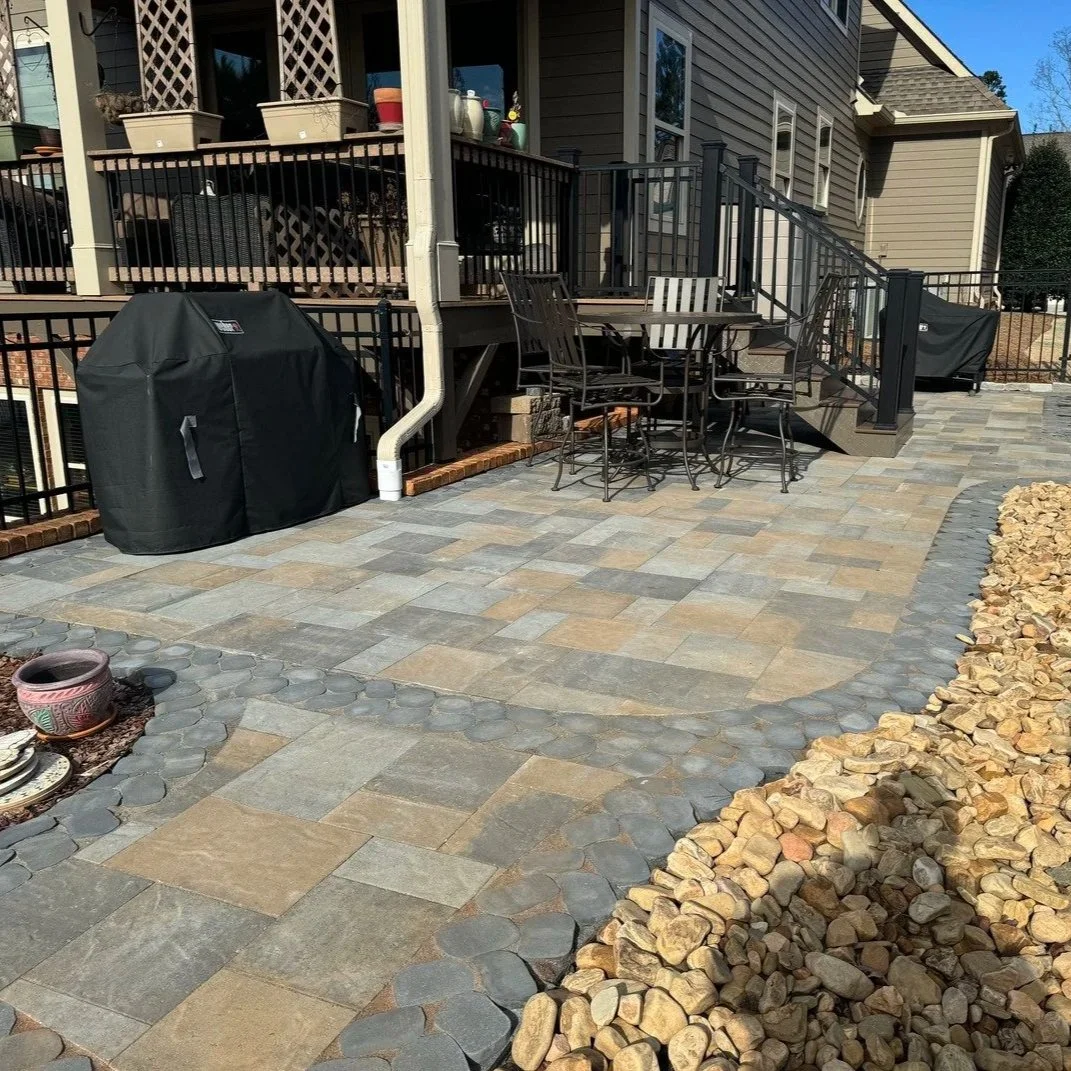
Functional and attractive paver driveway designed to handle traffic, drainage, and environmental stress in Gainesville, GA.
Understanding Why Driveway Design Matters More Than Aesthetics
A paver driveway in Gainesville, GA, does far more than frame the front of a home. It carries repeated vehicle loads, manages stormwater, interacts with clay-heavy soil, and absorbs constant environmental stress. Design decisions that focus only on appearance often overlook how driveways actually function day after day. Unlike patios or walkways, driveways experience concentrated weight, turning forces, and braking pressure that test the integrity of both the surface and the base beneath it. A design that ignores those forces may look impressive initially, but struggles to hold alignment as months and years pass.
Function and appearance work together in successful driveway design. Layout choices influence load distribution, drainage behavior, and long-term maintenance demands. In Gainesville, frequent rainfall and slow-draining soils amplify the consequences of poor planning. Standing water, joint washout, and surface shifting tend to show up first in driveways because of their constant use. Designing with function in mind protects the visual investment rather than competing with it. Homeowners who understand this relationship approach driveway design as a system rather than a surface treatment.
Evaluating Site Conditions Before Choosing A Layout
Every paver driveway design should begin with an honest assessment of the site. Slope, soil composition, existing drainage paths, and available space all influence what layouts will perform well long-term. Gainesville properties often include subtle elevation changes that affect how water moves across the driveway during storms. A slope that seems minor can concentrate runoff toward the garage or house foundation if the layout fails to account for it. Design decisions made without observing water behavior frequently create problems that appear only after heavy rainfall.
Soil conditions matter just as much as surface geometry. Clay soils common in North Georgia expand when wet and contract as they dry, placing lateral pressure on driveway edges and joints. Driveway designs that rely on weak edge restraint or long uninterrupted joint lines tend to reveal movement sooner under these conditions. Evaluating site constraints early allows the design to work with natural forces instead of resisting them blindly. Proper layout selection begins with understanding what the ground will do beneath the pavers rather than forcing a pattern that fights local conditions.
Choosing Paver Shapes That Support Vehicle Loads
Paver shape directly affects how well a driveway handles weight and movement. Rectangular and square pavers remain popular for driveways because their geometry supports tight interlock when installed correctly. In Gainesville, where moisture frequently softens subsurface layers, strong interlock helps distribute vehicle loads across a broader area rather than allowing individual pavers to shift independently. Smaller pavers often outperform larger units in driveways because they spread weight across more joints and adapt better to minor base movement.
Larger format pavers still appear in modern driveway designs, but they demand exceptional base preparation and restraint systems. Turning tires and braking forces concentrate stress on fewer units, increasing the importance of precise installation. Homeowners drawn to large paver aesthetics benefit from understanding that visual simplicity increases structural responsibility beneath the surface. Shape selection becomes a balance between style preference and realistic performance expectations shaped by Gainesville’s climate and soil behavior.
Pattern Selection And Its Impact On Driveway Stability
Pattern choice plays a critical role in driveway longevity. Some layouts resist lateral movement far better than others when subjected to vehicle traffic. Herringbone patterns remain a top choice for paver driveways in Gainesville because their interlocking geometry distributes force in multiple directions. When vehicles turn or brake, the pattern resists spreading and joint separation more effectively than linear layouts.
Running bond patterns also appear in driveways, particularly where aesthetics align with the home’s architecture. However, their performance depends heavily on edge restraint quality and base compaction. Continuous joint lines may open under stress if preparation falls short. Driveway design requires matching pattern trends with functional demands rather than selecting layouts based solely on appearance. Patterns that perform well under load reduce maintenance needs and preserve surface alignment through seasonal changes.
Planning For Drainage As A Core Design Element
Drainage influences driveway performance as much as load capacity. Water that pools on or beneath a paver driveway accelerates joint loss, base weakening, and surface movement. In Gainesville, rainfall intensity and frequency make drainage planning essential rather than optional. Design begins with directing water away from the driveway surface through slope control, surface grading, and subsurface solutions where necessary.
Paver driveways offer opportunities to manage runoff more effectively than solid concrete, but only when designed intentionally. Joint spacing, base materials, and edge transitions influence how water enters and exits the system. Designs that ignore drainage often rely on surface shedding alone, which fails once joints clog or base saturation increases. Integrating drainage considerations into layout decisions protects both the driveway and surrounding structures from moisture-related damage.
Edge Restraints And Their Role in Long-Term Performance
Edges represent the most vulnerable points in any paver driveway. Vehicle weight pushes outward with every turn and stop, placing continuous pressure on perimeter restraints. In Gainesville’s expanding soils, that pressure increases as moisture levels fluctuate seasonally. A driveway design without robust edge restraint invites spreading, joint separation, and uneven surfaces over time.
Designing edges involves more than selecting a border style. It requires considering restraint materials, anchoring methods, and how adjacent landscaping interacts with the driveway perimeter. Soil buildup, mulch, and plant roots all influence edge stability. Strong design accounts for these factors upfront, preventing slow outward movement that compromises the entire surface. Edge planning supports structural integrity as much as visual framing.
Considering Turning Radii And Vehicle Movement
Driveway design must account for how vehicles actually move, not just where they park. Turning radii, entry angles, and approach paths influence where stress concentrates on the surface. In Gainesville neighborhoods with limited frontage or tight access, turning forces often concentrate near edges and entry points. Patterns and paver orientation affect how well those forces distribute across the surface.
Designs that ignore turning behavior frequently show early wear at corners and transitions. Pavers shift, joints open, and edges deform under repeated stress. Aligning pattern orientation with vehicle movement reduces this strain. Thoughtful design anticipates how drivers enter, exit, and maneuver rather than treating the driveway as a static slab.
Balancing Aesthetic Goals With Maintenance Reality
An attractive driveway should age gracefully rather than demanding constant correction. Some design elements create visual interest but increase maintenance demands under Gainesville conditions. Intricate borders, mixed materials, and sharp contrast patterns highlight even minor movement or staining. Simpler designs often hide wear better, reducing visible imperfections over time.
Maintenance reality influences which designs retain appeal long-term. Driveways that tolerate minor shifts without looking distressed support a cleaner appearance with less intervention. Balancing style with practicality leads to designs that remain attractive without requiring frequent repairs or adjustments as seasons change.
Coordinating Driveway Design With Surrounding Hardscape
Driveways rarely exist in isolation. Walkways, patios, and entry features often connect visually and structurally. Design consistency across these elements improves flow and performance. In Gainesville, coordinating slopes and drainage between connected hardscape reduces water concentration and uneven settling.
Driveway design that complements adjacent features feels intentional rather than pieced together. Pattern continuity, material selection, and elevation transitions all contribute to cohesive performance. Thoughtful coordination prevents stress points where different surfaces meet, supporting long-term durability across the entire property.
Preparing For The Second Half Of The Design Conversation
Designing a functional and attractive paver driveway in Georgia requires a deeper exploration of base construction, material selection, installation standards, and long-term ownership considerations. Layout choices represent only part of the process. The remaining discussion addresses how structural preparation, climate-specific decisions, and maintenance planning influence driveway success in Gainesville.
How Base Construction Determines Driveway Longevity
A paver driveway only performs as well as the base beneath it, and in Gainesville, Georgia, base design carries even more weight due to soil behavior and moisture exposure. Clay-heavy soils retain water and shift as moisture levels change, placing constant stress on the layers that support the surface. Driveway design must account for this by specifying excavation depth, base material type, and compaction standards that exceed what might work for patios or walkways. A shallow or poorly compacted base may look stable initially, but it often reveals movement once vehicles begin using the surface regularly.
Base construction also affects how loads transfer across the driveway. A properly built base distributes weight evenly, preventing concentrated stress beneath tires and turning points. In Gainesville, where rainfall can saturate subgrade soils for extended periods, base materials must drain efficiently while maintaining structural integrity. Crushed stone bases with proper gradation allow water to move through without creating soft spots. Driveway design that integrates base performance from the beginning protects the surface pattern and minimizes future correction work.
Material Selection And How It Affects Appearance Over Time
Paver material choice influences both immediate visual impact and how the driveway ages in Gainesville’s climate. Concrete pavers remain common due to their strength and variety of colors and textures, while natural stone offers distinct character with different maintenance expectations. Material density, surface finish, and color stability all interact with moisture, sunlight, and vehicle use. Lighter colors may show staining more readily, while darker tones reveal dust and pollen accumulation common in North Georgia.
Surface texture also matters for traction and wear. Smooth finishes highlight modern designs but may show tire marks or scuffing more clearly. Textured finishes disguise wear better and improve grip during wet conditions. Driveway design benefits from selecting materials that complement both the architectural style of the home and the realities of daily use. Understanding how materials respond to local conditions helps homeowners choose options that remain attractive rather than disappointing as seasons pass.
Integrating Borders And Accents Without Weakening Structure
Borders and accent bands add visual interest and help frame a paver driveway, but their placement and execution affect structural performance. In Gainesville, borders often serve as both decorative and functional elements, reinforcing edges and containing the main field pattern. Contrasting colors or textures draw attention to transitions, which means even small alignment issues become more noticeable over time.
Designing borders requires attention to how they connect to the main pattern and how loads transfer across those connections. Borders that lack adequate restraint or sit on inconsistent base layers may separate or sink independently. Successful designs treat borders as integral structural components rather than surface decorations. When accents align with base construction and joint continuity, they enhance appearance without introducing weak points that compromise driveway performance.
Addressing Slope Transitions And Garage Interfaces
The transition between the driveway and the garage presents one of the most critical design challenges. This area experiences frequent braking, turning, and water exposure, all concentrated in a narrow zone. In Gainesville, rainwater often flows toward garages if slopes are not managed carefully, increasing the risk of moisture intrusion and surface wear. Driveway design must create smooth transitions that shed water away while supporting vehicle movement without abrupt changes.
Slope transitions also affect long-term alignment. Sharp grade changes place uneven stress on pavers and joints, accelerating wear. Gradual transitions distribute forces more evenly and reduce the likelihood of settlement. Design decisions at these interfaces influence both functional performance and curb appeal. Homeowners who prioritize careful transition planning often avoid the common issues that appear first near garage doors and entry points.
Lighting And How It Enhances Both Safety And Design
Driveway lighting plays a growing role in functional and attractive design. In Gainesville, where evening use and seasonal darkness vary, integrated lighting improves safety while highlighting pattern choices and materials. Lighting placement influences how the driveway is perceived visually, emphasizing textures and borders that define the space.
Designing for lighting requires planning conduit paths and fixture locations early to avoid disrupting the base later. Poorly planned lighting installations often disturb joint material or base layers, creating future settlement points. Thoughtful integration supports both nighttime visibility and long-term surface stability. Driveway designs that incorporate lighting from the start tend to feel cohesive rather than retrofitted, enhancing both usability and appearance.
Managing Runoff At The Driveway Edges
Water management does not stop at the surface. Driveway edges interact directly with surrounding soil, landscaping, and drainage paths. In Gainesville, heavy rain can erode soil along driveway borders, undermining edge restraint and allowing movement to spread inward. Design choices that address edge runoff protect both the driveway and adjacent landscape features.
Gravel shoulders, reinforced turf, or subtle grading adjustments help manage runoff without detracting from appearance. Driveway design that considers how water exits the surface prevents chronic moisture issues that lead to joint loss and surface distortion. Edge runoff management supports long-term stability while preserving clean lines and visual definition.
FAQs
Herringbone patterns are the strongest choice for driveways because they resist shifting, handle turning vehicles well, and distribute weight effectively—especially in moisture-prone North Georgia soils.
Driveway bases typically need 8–12 inches of compacted crushed stone, depending on soil quality and vehicle load. Proper compaction is critical for long-term performance.
Large-format pavers can work when installed over a properly engineered base, but they are more prone to cracking or shifting. Smaller pavers generally perform better under repeated vehicle stress.
Sealing helps reduce staining, moisture absorption, and color fading, but it must be done at the right time and with quality materials. Proper installation often has a bigger impact on longevity than sealing alone.
With correct base depth, drainage, edge restraints, and periodic maintenance, a paver driveway in Gainesville can last 30–50+ years without major structural issues.
