
How to Choose the Right Retaining Wall Type for Your Gainesville Property
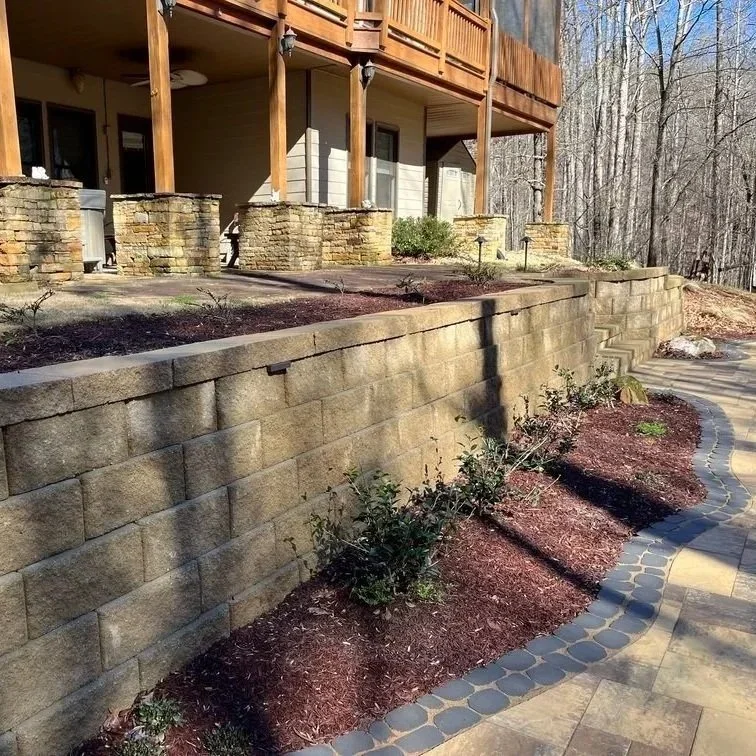
Choosing the right retaining wall is essential for managing North Central Florida’s soil pressure and protecting your property’s structural integrity.
Retaining walls play a much bigger role than many homeowners realize, especially in a place like Gainesville, where rain, soil conditions, and rolling terrain all work together to challenge the landscape. Choosing the right retaining wall is not about picking the most attractive option from a brochure. It is about matching the wall type to your property’s conditions, your long-term goals, and the realities of North Central Florida.
A retaining wall is a structure designed to hold back soil at an elevation change. Its primary job is to resist gravity and keep soil from moving downhill. In residential settings, retaining walls help prevent erosion, stabilize slopes, create flat and usable spaces for patios or driveways, and protect foundations, fences, and landscaping from shifting ground. A true retaining wall is different from simple landscape edging. Edging may define a garden bed, but it does not carry significant soil loads or manage water pressure as a structural wall does.
From an engineering standpoint, retaining walls work by resisting lateral earth pressure, which is the force soil exerts as it pushes outward. They also manage water by redirecting or relieving pressure created when soil becomes saturated. Loads from the soil and anything above it are transferred safely down into the ground through the wall and its footing or base. Choosing the wrong wall type or skipping proper design can lead to leaning, cracking, or collapse, which in a residential setting can damage homes, neighboring properties, and utilities.
Why Gainesville Conditions Matter
Gainesville properties come with special requirements that make wall selection especially important. The area experiences frequent heavy rainstorms, high humidity, and a mix of sandy soils, loam, and clay-rich pockets, depending on the neighborhood. During heavy rains, water builds up behind walls, increasing hydrostatic pressure. Clay soils can expand and contract with changes in moisture levels, while sandy soils can erode easily if not properly contained. These conditions demand strong drainage and materials that perform well in wet environments.
Gainesville also has a mix of older neighborhoods with mature trees and newer developments built near lakes, wetlands, and retention ponds. Tree roots, fluctuating water tables, and environmental buffers all influence where walls can be placed and how they should be built. A wall design that works in a dry, rocky region may fail quickly in North Central Florida if drainage and soil behavior are not properly addressed.
When a Retaining Wall Is Necessary
Many homeowners wonder when a retaining wall is actually necessary. Common situations include steep backyards, sloping driveways, waterfront properties, raised gardens on hillsides, or areas where erosion threatens patios, fences, or foundations. Warning signs of unstable slopes include soil slumping, exposed roots, recurring washouts after storms, or cracks forming in hardscape near elevation changes.
It is important to understand that even short walls can be structurally critical. A three or four-foot wall holding back saturated soil on a slope can experience significant pressure. Decorative edging and true retaining walls serve very different purposes, and confusing the two often leads to failure. When there is uncertainty, a professional site assessment can clarify whether a wall is needed and what type is appropriate.
Main Types of Retaining Walls
There are several main retaining wall types commonly used around Gainesville homes. Gravity walls rely on their own weight to hold back soil. Segmental or modular block walls use interlocking concrete blocks and may include reinforcement for taller applications. Cantilevered poured concrete walls use reinforced bases to resist pressure efficiently. Anchored systems rely on tiebacks driven into the soil. Timber walls use pressure-treated wood components. Natural stone walls are either dry-stacked or mortared. Gabion walls use wire baskets filled with rock to create mass and allow drainage. No single option is universally best. The right choice depends on site conditions, budget, aesthetics, and long-term performance goals.
Key Site Factors to Evaluate
Before choosing a wall type, several site factors should be evaluated. Slope steepness and wall height are primary drivers. Gentle grades and low walls allow for simpler systems, while steep slopes or tall walls often require engineered solutions. Terracing with multiple shorter walls is sometimes safer and more practical than building one tall structure.
Overall site layout also matters. Distance to the house, driveways, trees, and property lines can affect wall thickness, footing design, and construction access. In tighter Gainesville neighborhoods, limited space and equipment access may rule out bulky wall systems.
Soil type is another major consideration. Sandy soils drain well but erode easily. Clay soils hold water and expand under load. Loamy soils provide more stable support when properly compacted. Poor soil conditions may require deeper footings, soil replacement, or more robust wall systems. For larger walls, geotechnical reports may be needed, while smaller projects may rely on professional site inspections.
Water and drainage are often the main reasons retaining walls fail. Hydrostatic pressure builds as water accumulates behind a wall, dramatically increasing lateral forces. Gravel backfill, perforated drain pipes, weep holes, and proper grading are essential. Some wall types tolerate water better than others, and very wet sites may limit material choices.
Proximity to structures and property lines further influences design. Walls near foundations or supporting driveways require careful engineering. Height restrictions and setback rules may apply near property boundaries. Underground utilities, drainage lines, and septic systems can also limit footing depth and wall placement.
Codes, Engineering, and Professional Guidance
Local codes and permitting requirements play a major role in wall selection. In Gainesville and Alachua County, permits are often required for walls above certain heights or those supporting additional loads. The permitting process may involve plan submission, engineering drawings, and drainage review. Skipping permits can lead to fines, forced removal, or complications during resale.
Structural or geotechnical engineers are typically needed for taller walls, walls on steep or unstable slopes, or walls supporting driveways and buildings. Engineers provide load calculations, reinforcement details, footing design, and drainage specifications. While this adds an upfront cost, it often results in safer and more cost-effective long-term solutions.
Setbacks, height limits, and stormwater rules can influence which wall types are feasible. Height restrictions may make terraced segmental walls more practical than single tall structures. Contractors familiar with Gainesville codes can recommend compliant designs early in the process.
Working with licensed local contractors offers clear benefits. Gainesville professionals understand local soil behavior, permitting expectations, and which materials perform best in the region. Homeowners should look for proper licensing, insurance, references, clear estimates, and contractors who help select appropriate solutions rather than pushing one system for every project.
Comparing Wall Types in Detail
Gravity retaining walls rely on mass and width to resist soil pressure. They are often built from concrete, large blocks, or stone. In Gainesville, they work well for low to moderate heights where soil bearing capacity is adequate. Their main drawback is their thickness, which can take up valuable yard space.
Segmental retaining walls are among the most popular choices in Gainesville. Made from interlocking concrete blocks, they can function as gravity walls at low heights or be reinforced with geogrid for taller applications. They offer flexibility, good drainage performance, and a wide range of aesthetic options. When installed correctly with proper base preparation and drainage, they perform well in wet climates and can last decades.
Timber retaining walls provide a natural look and a lower upfront cost, but they come with trade-offs. In Gainesville’s humid, termite-prone environment, wood is susceptible to rot and insect damage. Even pressure-treated timber has a limited lifespan when in constant contact with wet soil. Timber walls are best reserved for low, non-critical applications away from structures.
Poured concrete and cantilevered walls offer high strength and efficiency. Reinforced with steel, they can handle taller heights and heavier loads while taking up less space than gravity walls. These systems require professional design and construction and come with higher upfront costs. Cracking can occur if not properly designed and cured, especially with soil movement and moisture changes.
Natural stone retaining walls provide timeless appeal and exceptional durability when built correctly. Dry-stack stone allows some flexibility and drainage, while mortared stone offers a more formal appearance. Stone walls require skilled labor and higher budgets, but they integrate beautifully with Gainesville landscapes and offer long-term value.
Gabion walls use wire baskets filled with rock to create permeable retaining structures. They excel in wet or erosion-prone areas, such as near creeks or drainage channels. Their industrial appearance and larger footprint make them less common in residential front yards, but they can be highly effective in functional or less visible areas.
Budget, Aesthetics, and Long-Term Performance
Balancing budget, longevity, and maintenance is essential. Lower-cost options may require replacement sooner, while higher-cost systems often deliver better long-term value. Maintenance expectations vary by wall type, and Gainesville’s rain and vegetation growth can increase upkeep for some materials. Repairability also matters, especially for homeowners who anticipate future landscape changes.
Aesthetics and landscape integration should not be overlooked. Wall materials should complement the home’s architecture and existing landscaping. Many wall systems can be designed to work around mature trees, integrate planting pockets, or create terraces that expand usable outdoor space. Lighting, railings, and safety features should be considered early to avoid awkward additions later.
Drainage and backfill are critical for every wall type. Free-draining aggregate, perforated pipes, and proper grading are not optional in Gainesville’s climate. Even the strongest wall will fail if water management is ignored. Surface water above and below the wall must also be addressed to prevent overwhelming internal drainage systems.
Retaining wall failures are often caused by poor design, inadequate drainage, substandard materials, or changes in loading after construction. Warning signs include bulging, leaning, cracking, and water pooling. While some low walls may be suitable for experienced DIY homeowners, many situations carry risks that make professional involvement the safer choice.
A Step-by-Step Decision Process
Choosing the right wall type is a step-by-step process. Start by defining the wall’s purpose and priorities. Assess site conditions and constraints. Check local codes and permitting requirements. Compare wall types against your needs and budget. Finally, get professional input to confirm feasibility and finalize the design.
Selecting the right retaining wall for your Gainesville property begins with understanding what retaining walls do and how local climate and soil conditions affect their performance. Evaluating slope, height, soil, drainage, and proximity to structures is essential before choosing materials. Local codes and engineering requirements may guide or limit options, but they exist to protect safety and property value.
Each wall type offers distinct advantages and drawbacks. By following a structured decision process and working with qualified local professionals, homeowners can build retaining walls that are both functional safeguards and attractive, long-lasting features.
FAQs
Walls that manage water effectively perform best in Gainesville. Segmental block walls, properly drained concrete walls, natural stone, and gabion walls can all work well when designed with adequate drainage. The key factor is not just the material, but how water is handled behind and around the wall.
Height thresholds vary, but permits are commonly required for walls around three to four feet or taller, or for walls supporting additional loads. Homeowners should verify requirements with Gainesville or Alachua County authorities before building.
Timber walls can work for low, non-critical applications, but humidity, rot, and termites limit their lifespan in Gainesville. They are generally not recommended for tall walls or walls protecting structures.
Yes. Nearly all retaining walls require drainage. Skipping drainage in Gainesville’s wet environment greatly increases the risk of failure, regardless of wall type.
